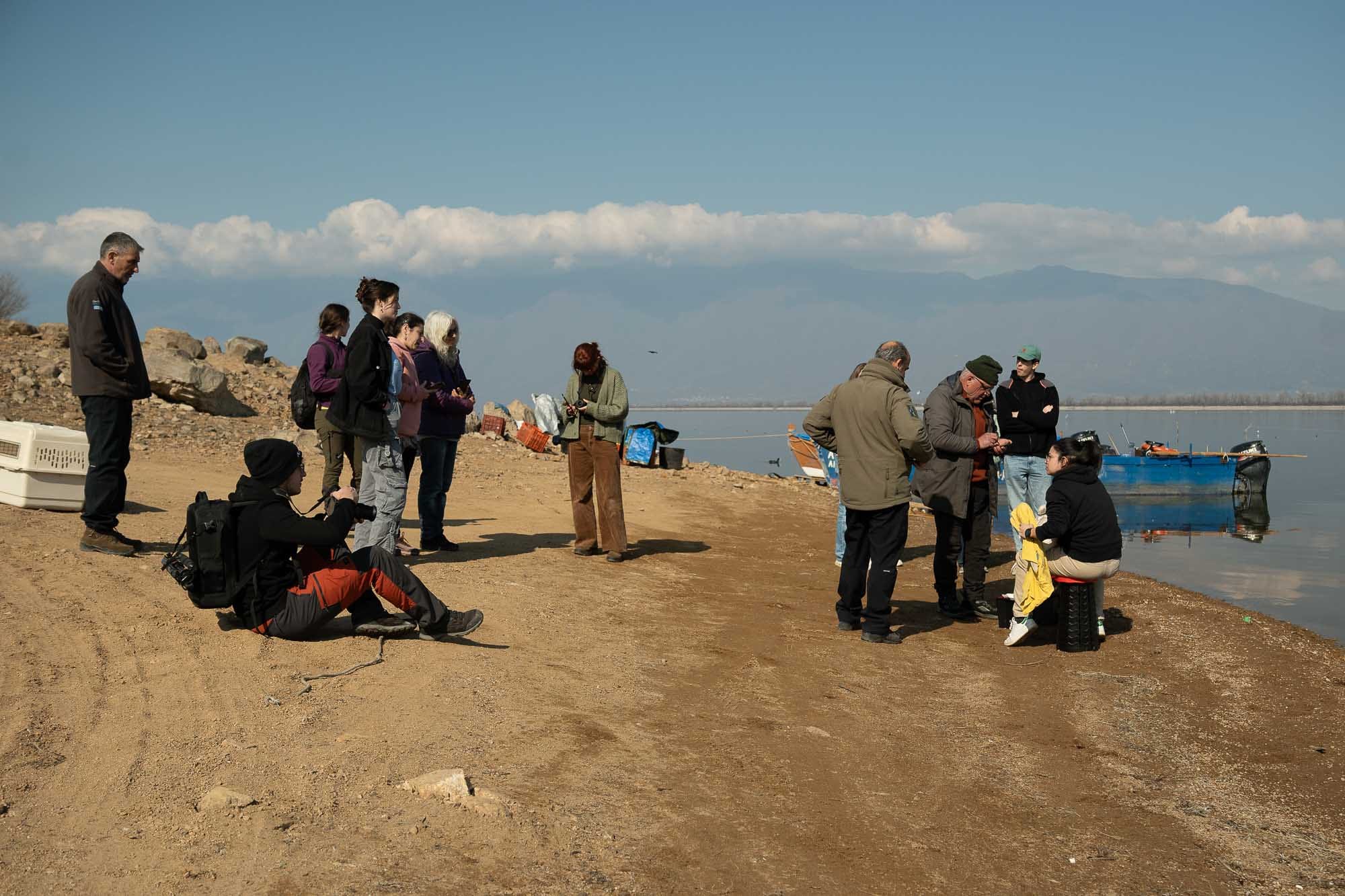
A special release took place at Lake Kerkini, as a young Dalmatian Pelican (Pelecanus crispus), which had suffered a serious injury, was released back into its natural environment.
Rescue and care
The bird was found in the Evros Delta in November, possibly suffering from an electric shock. Its injury was so severe that it could not use one of its wings, making flight impossible. It was taken to the Action for Wildlife care center, where it stayed for three months, receiving the care it needed to recover as best as possible. Ultimately, its left wing had to be amputated.
The release process
Although the Dalmatian Pelican can no longer fly, it was deemed capable of surviving in Lake Kerkini, where there is abundant food and a safe environment. For its monitoring, plastic rings were placed on its legs and a tag was placed on its healthy wing, so that it can be located from a distance.
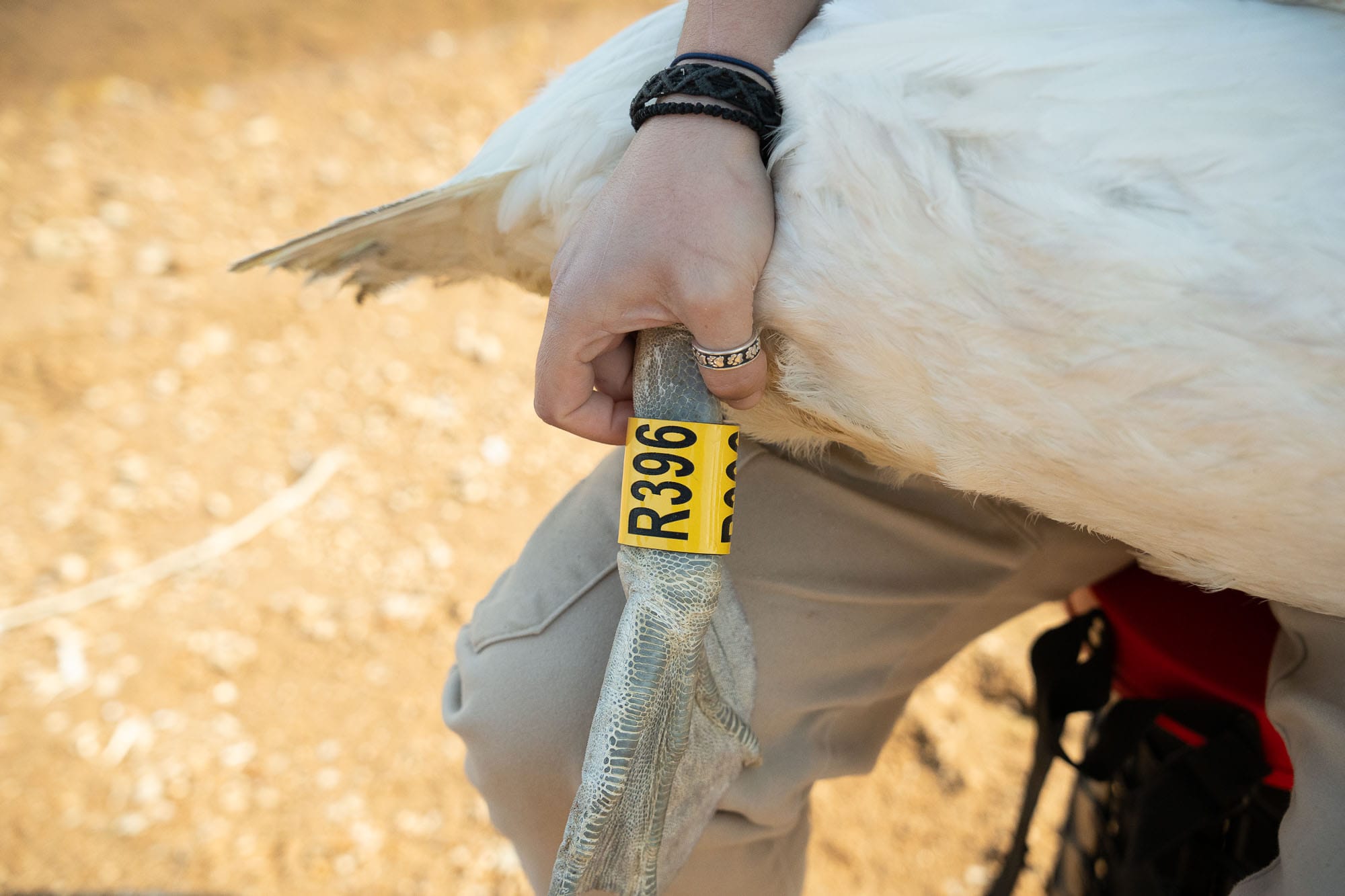
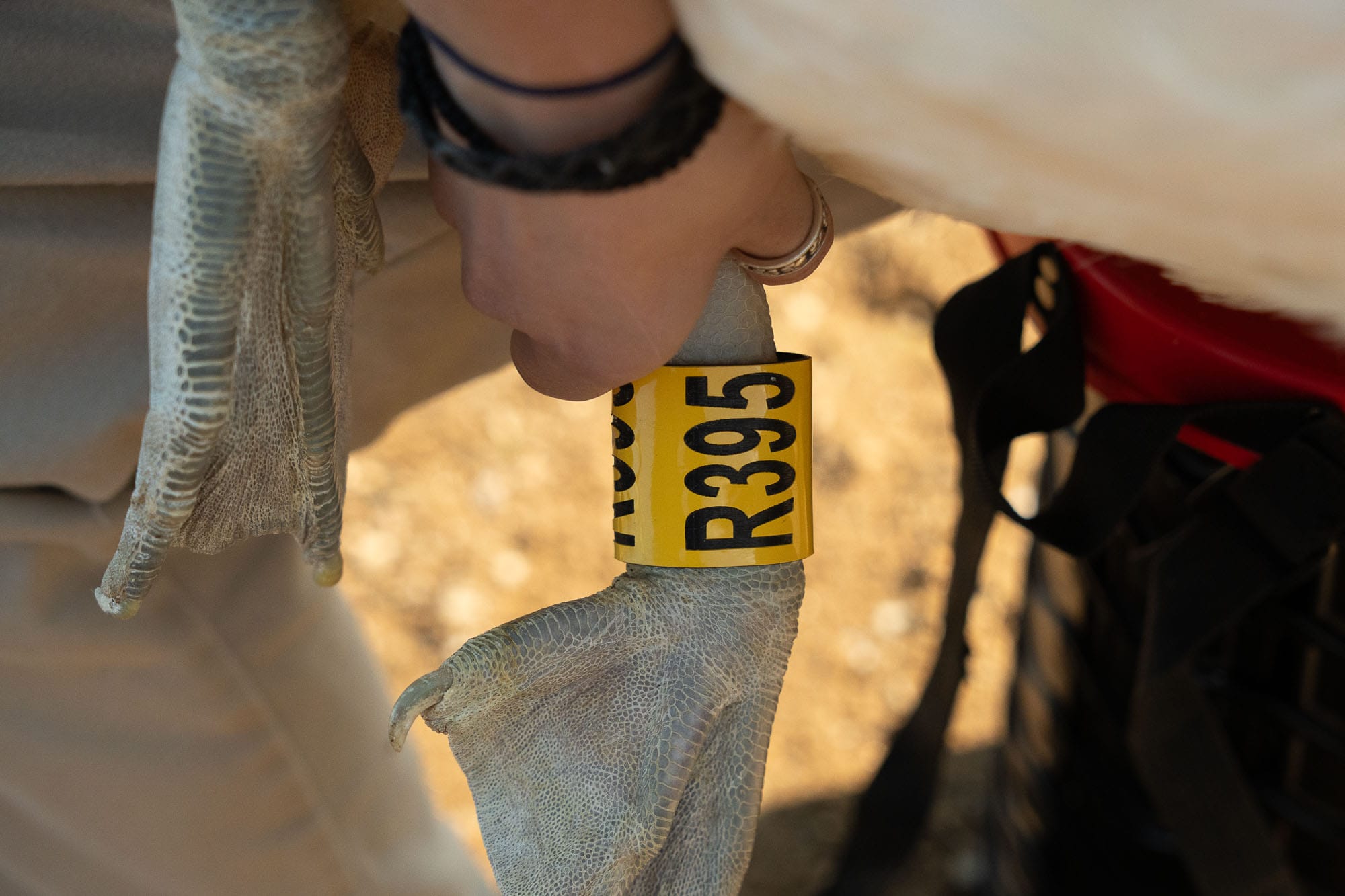
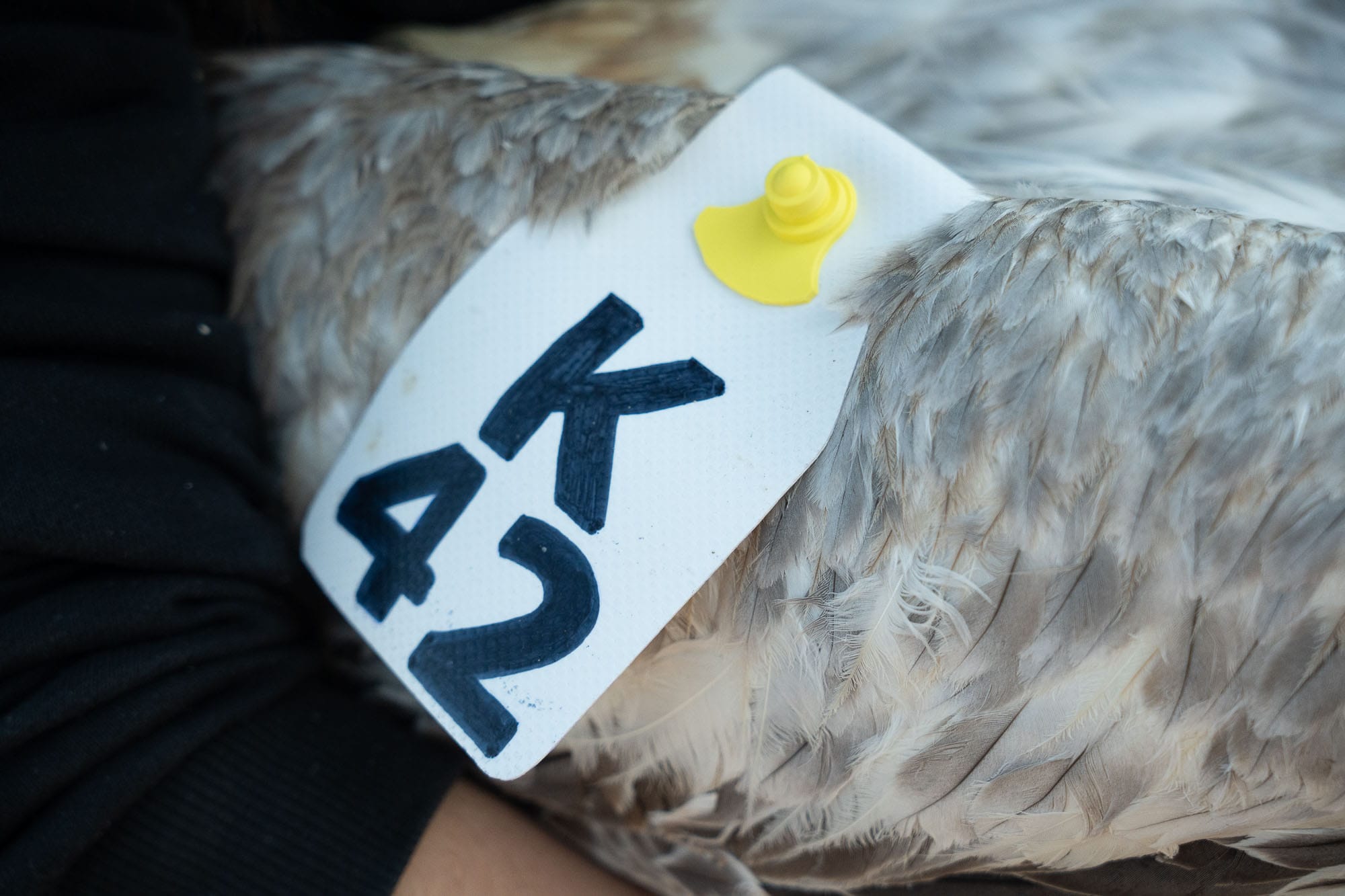
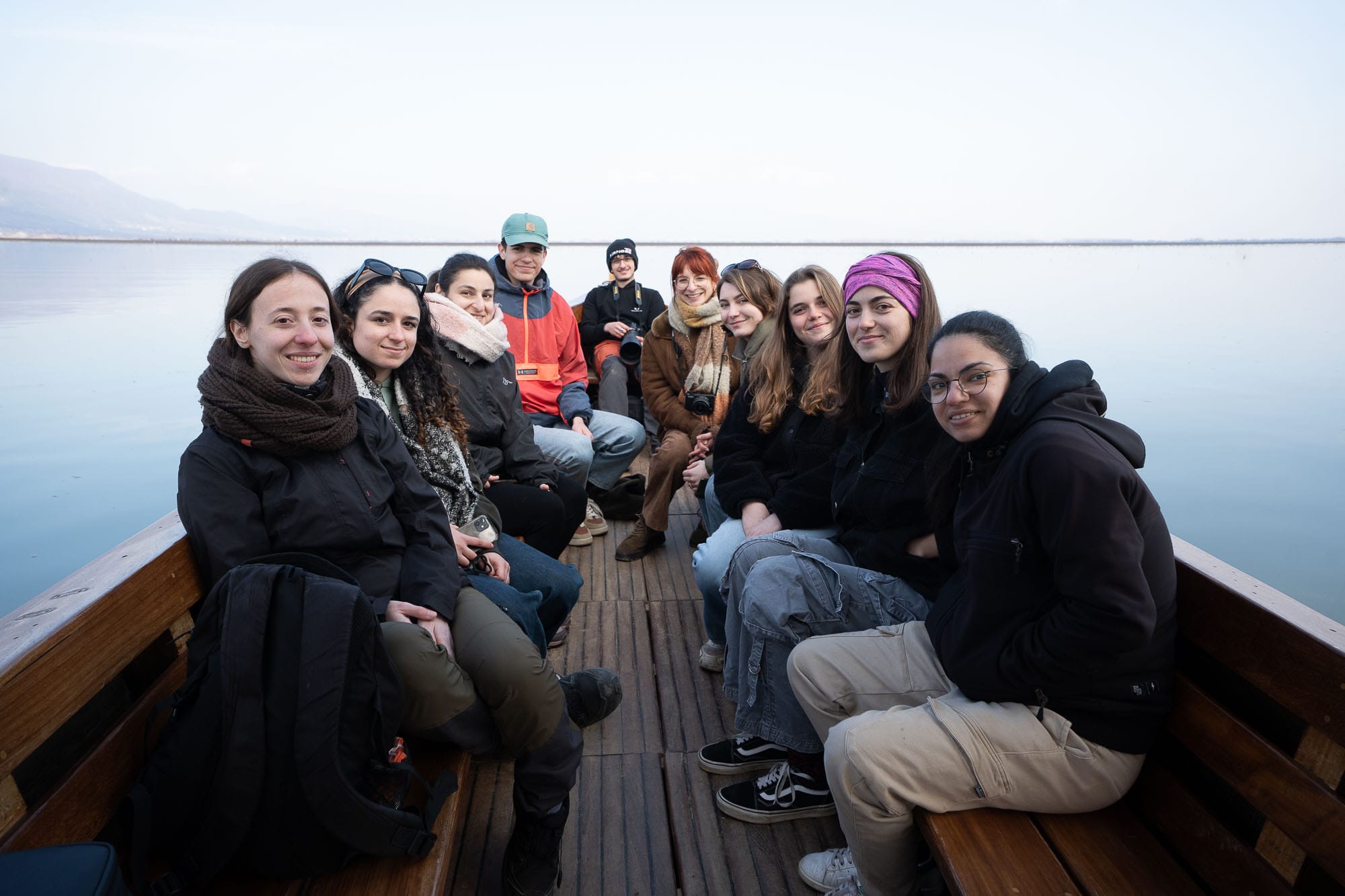
The placement of the rings and the tag was done by the Coordinator of the Kerkini Lake Branch of the O.FY.PE.K.A., Theodoros Naziridis, with the assistance of the Veterinarian of the Action for Wildlife, Theano Papadopoulou and in the presence of the Biologist of the Action for Wildlife, Frosos Parcharidou. The release was also attended by the volunteers of Action for Wildlife who are offering their valuable help during this period in the care of animals, Thomas de Labarre (European Solidarity Corps Greece), Louise Langevin (Service Civique), Eva Pinault (Service Civique), Anais Perrot (European Solidarity Corps Greece), Klara Lach (European Solidarity Corps Greece), Tom Vannier (Erasmus+), Nafsika Kotsarini, Kalliroi Tsiganou and Vasiliki Manolatou.
The importance of the release
Lake Kerkini is one of the most important wetlands in Greece and hosts one of the largest populations of Dalmatian Pelicans in Europe. The successful adaptation of this bird will provide valuable data on the survival potential of Dalmatian Pelicans with mobility problems.
Similar actions have taken place in the past, with several individuals surviving for years in the lake. In winter, most of them gather in the southern part of the lake, while in spring and summer they move further north, near the area's Dalmatian Pelican colony.
The release of this young Dalmatian Pelican is another step in efforts to conserve the species and protect our country's wetlands.