With great success and deep emotion, the recent wildlife release events were carried out, organized by Action for Wildlife, in collaboration with Alkyoni and with the valuable support of the Natural Environment and Climate Change Agency (NECCA).
The close collaboration with Alkyoni was at the heart of these actions, as many of the animals that were released had been treated at the Wildlife Action Health Center and sent to the Alkyoni facilities in Paros for the final stage of their rehabilitation. Together, we achieved our common goal: to return these creatures to their natural environment.
The great preparation
Many of the birds were transferred from the Alkyoni Health Center in Paros to the Wildlife Action Center in Kalohori, Thessaloniki, where they received the final care before their big release back to nature day.
The transfer to the wetlands of Northern Greece was deemed necessary so that the animals – affected by the long rehabilitation period – would not be forced to fly alone, covering large distances over the sea, which would pose serious risks to their safety.
The process of transferring wild animals, even over short distances, requires special attention, as the primary goal is the well-being of the animals. Although it is a stressful process for those involved, in this particular case, everything went smoothly and the animals safely reached their destination.
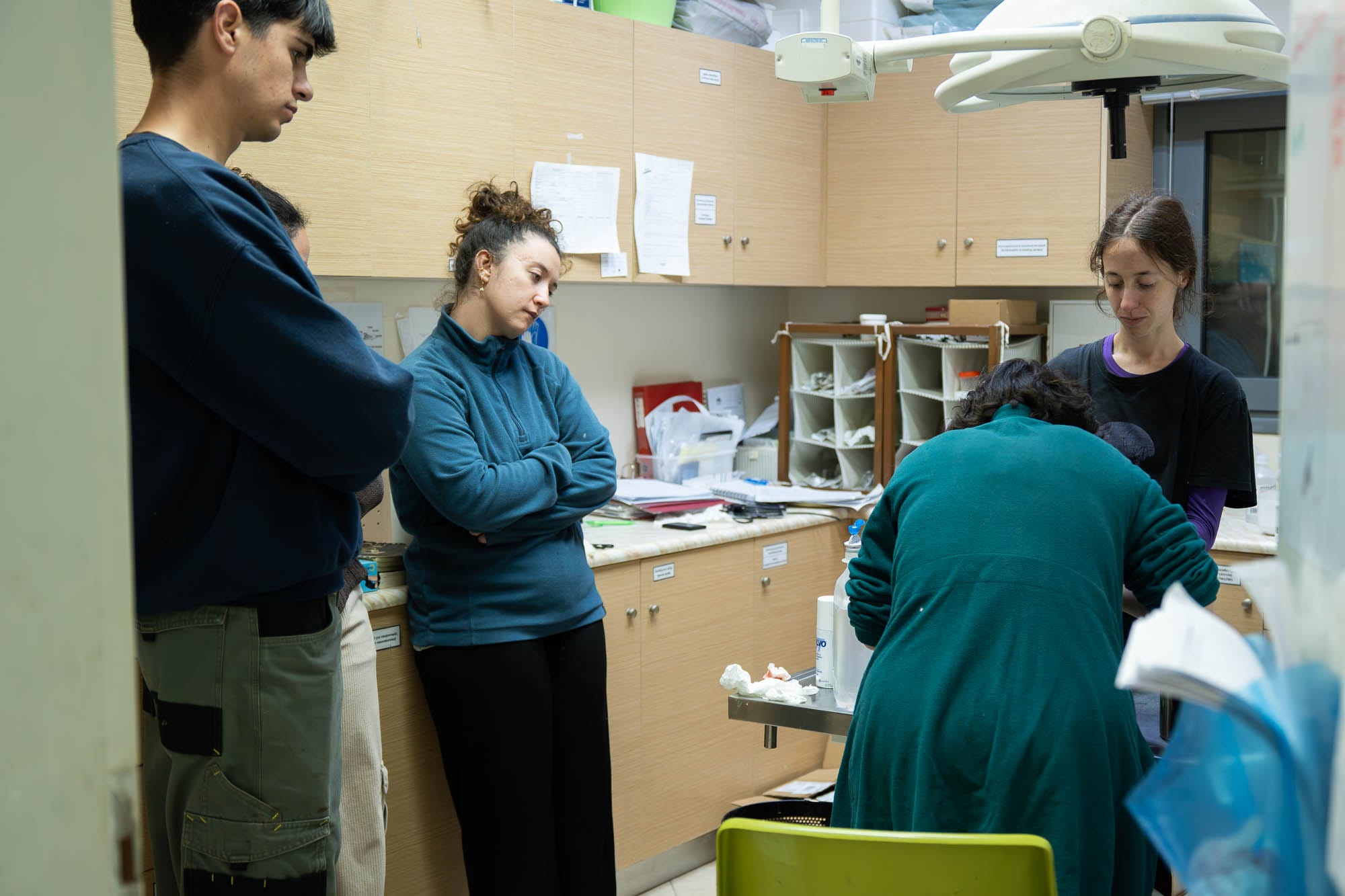
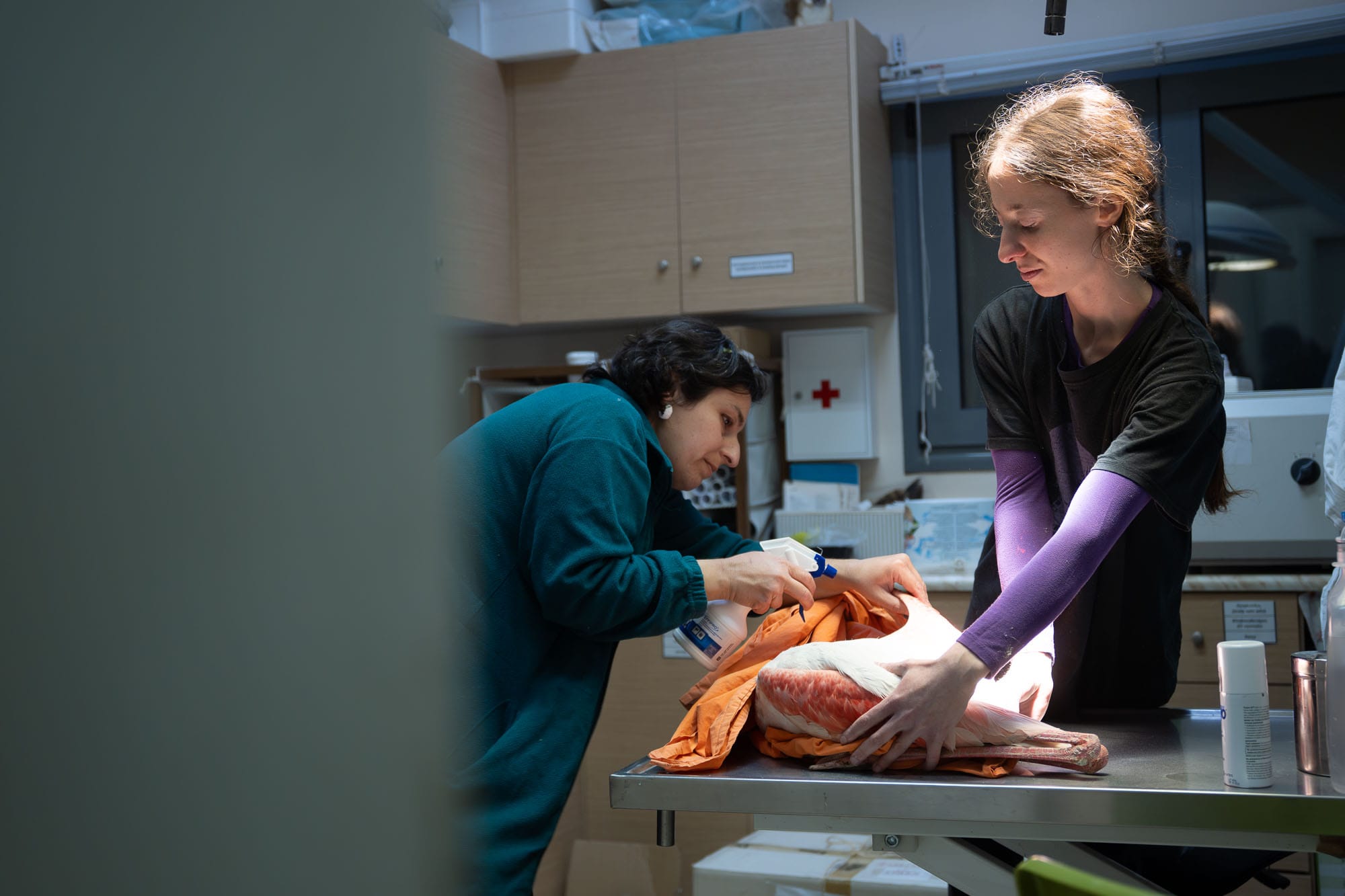
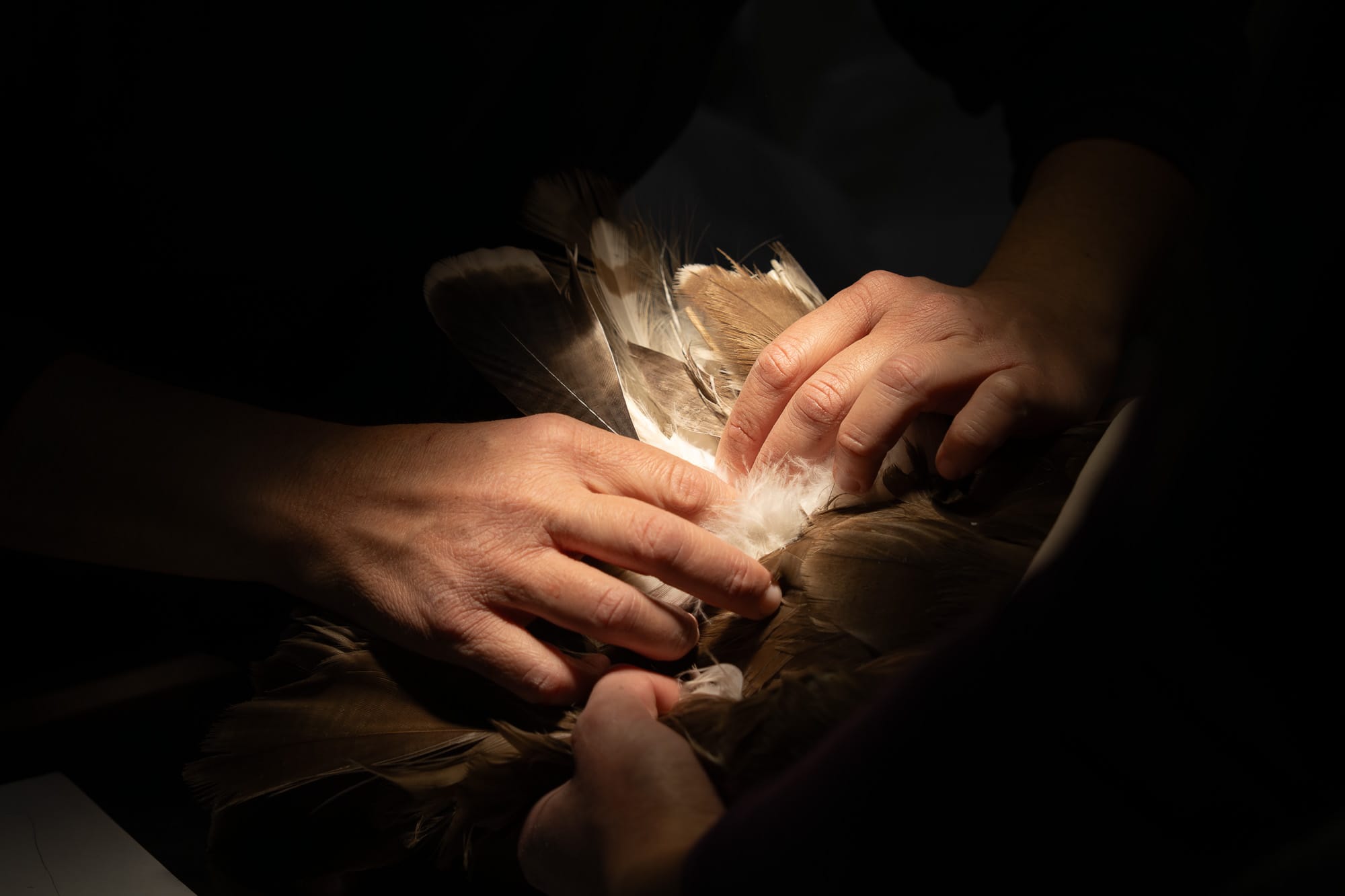
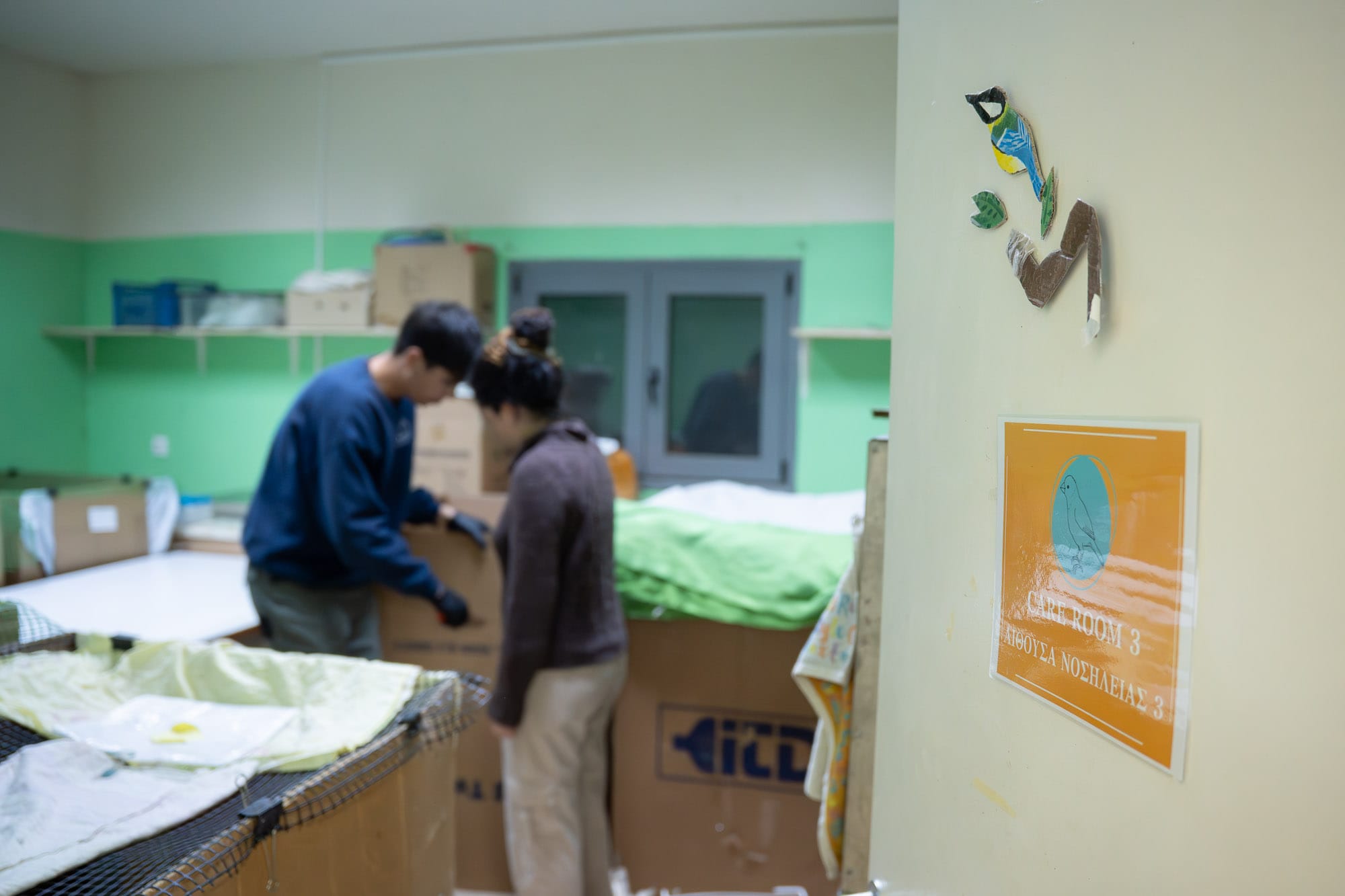
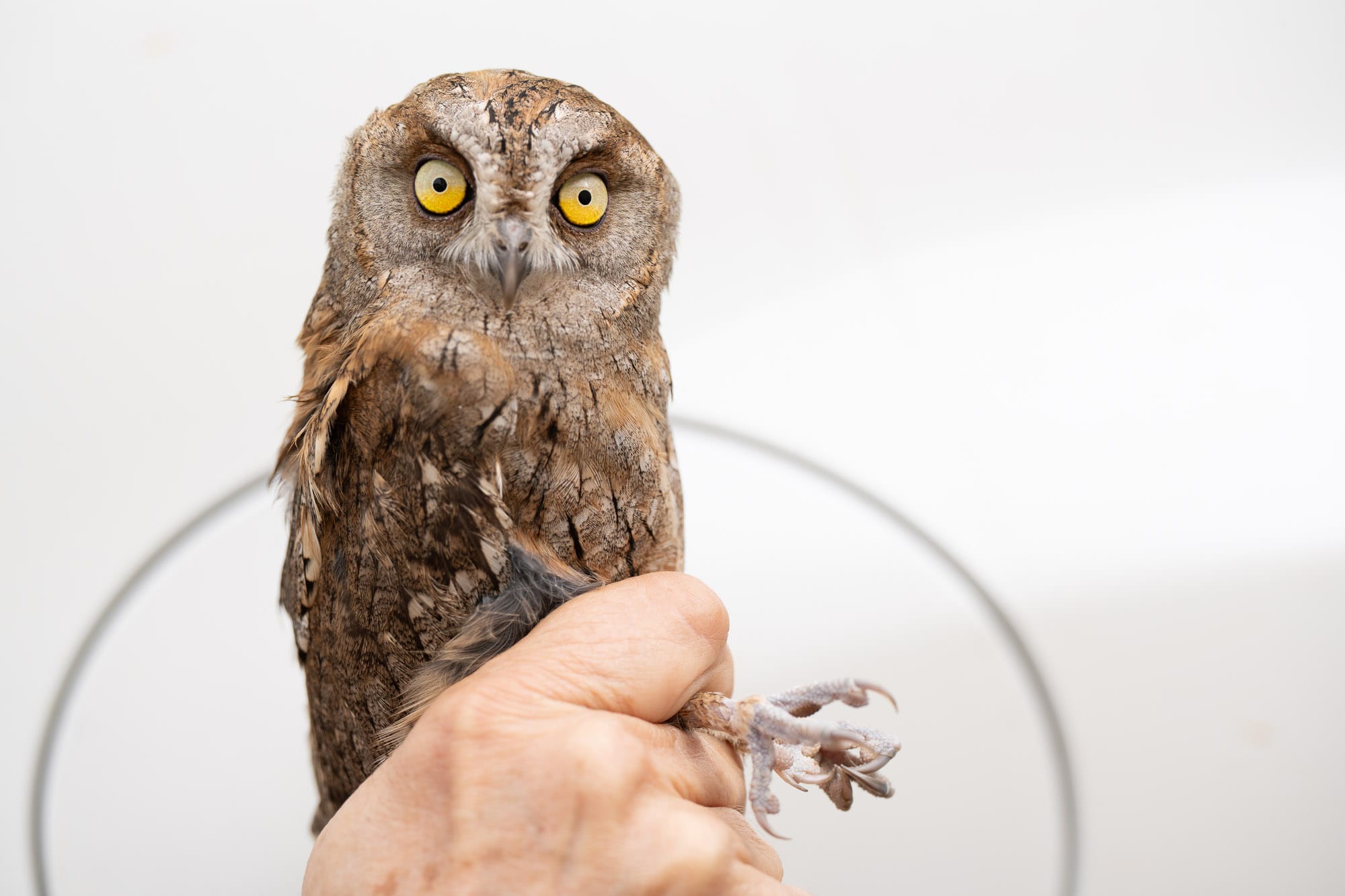
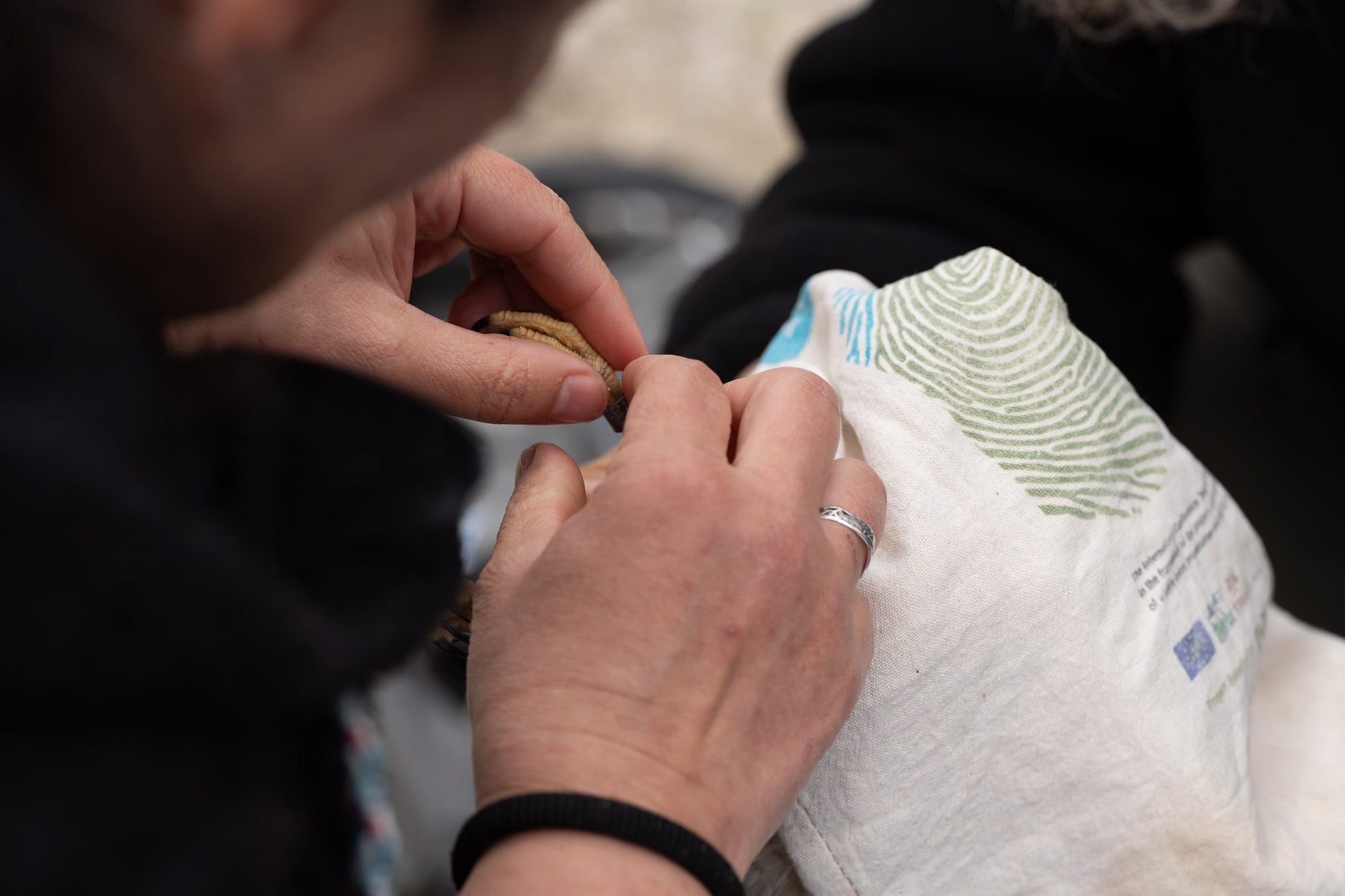
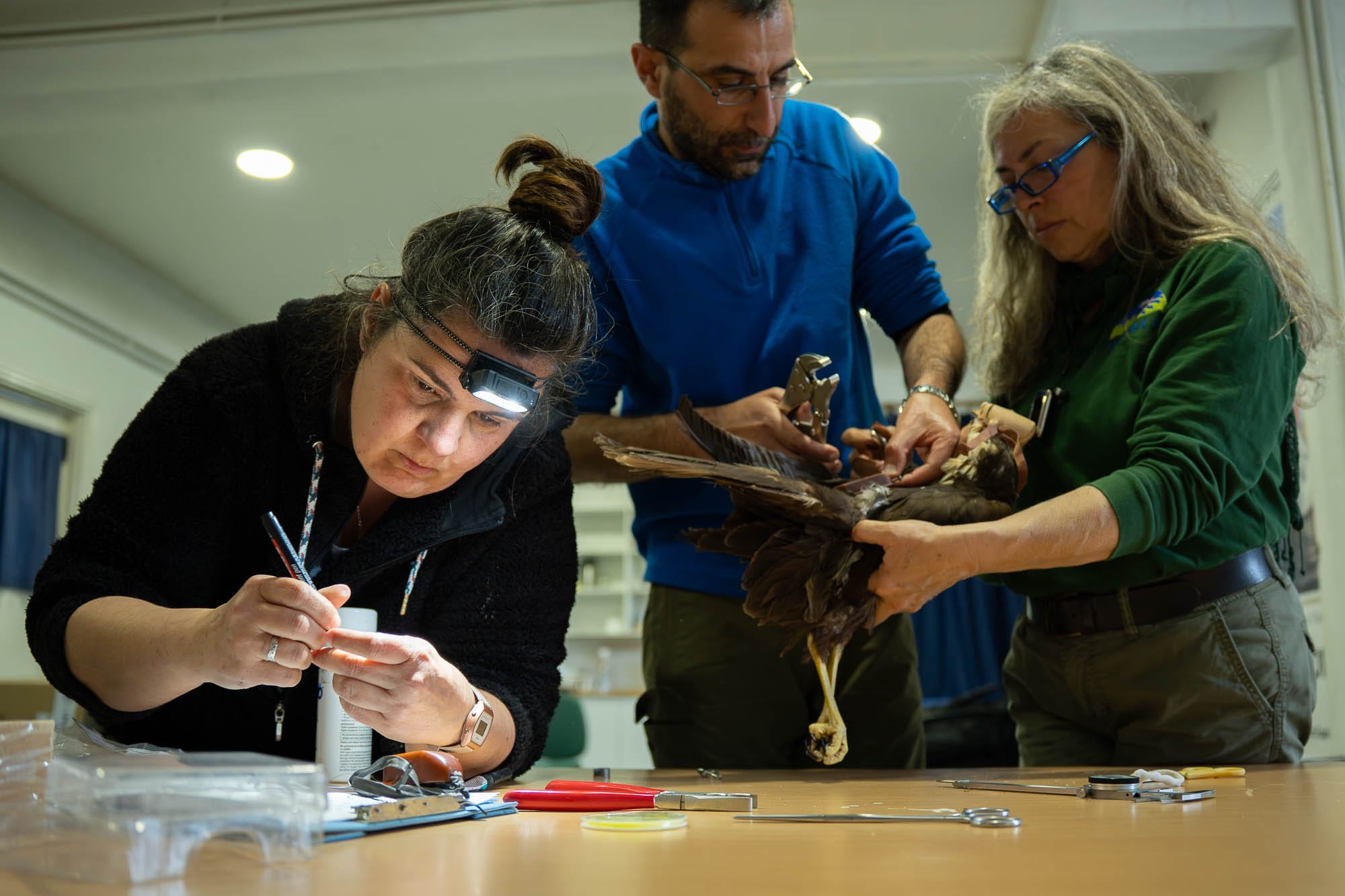
The scientific staff and volunteers of the Action for Wildlife worked diligently until late on Sunday to ensure that all the animals were in the best possible condition before their release back to nature, thus maximizing the chances of success. Among the important preparations was the time-consuming restoration of the plumage of birds of prey, such as the Snake Eagle and the Honey Buzzard.
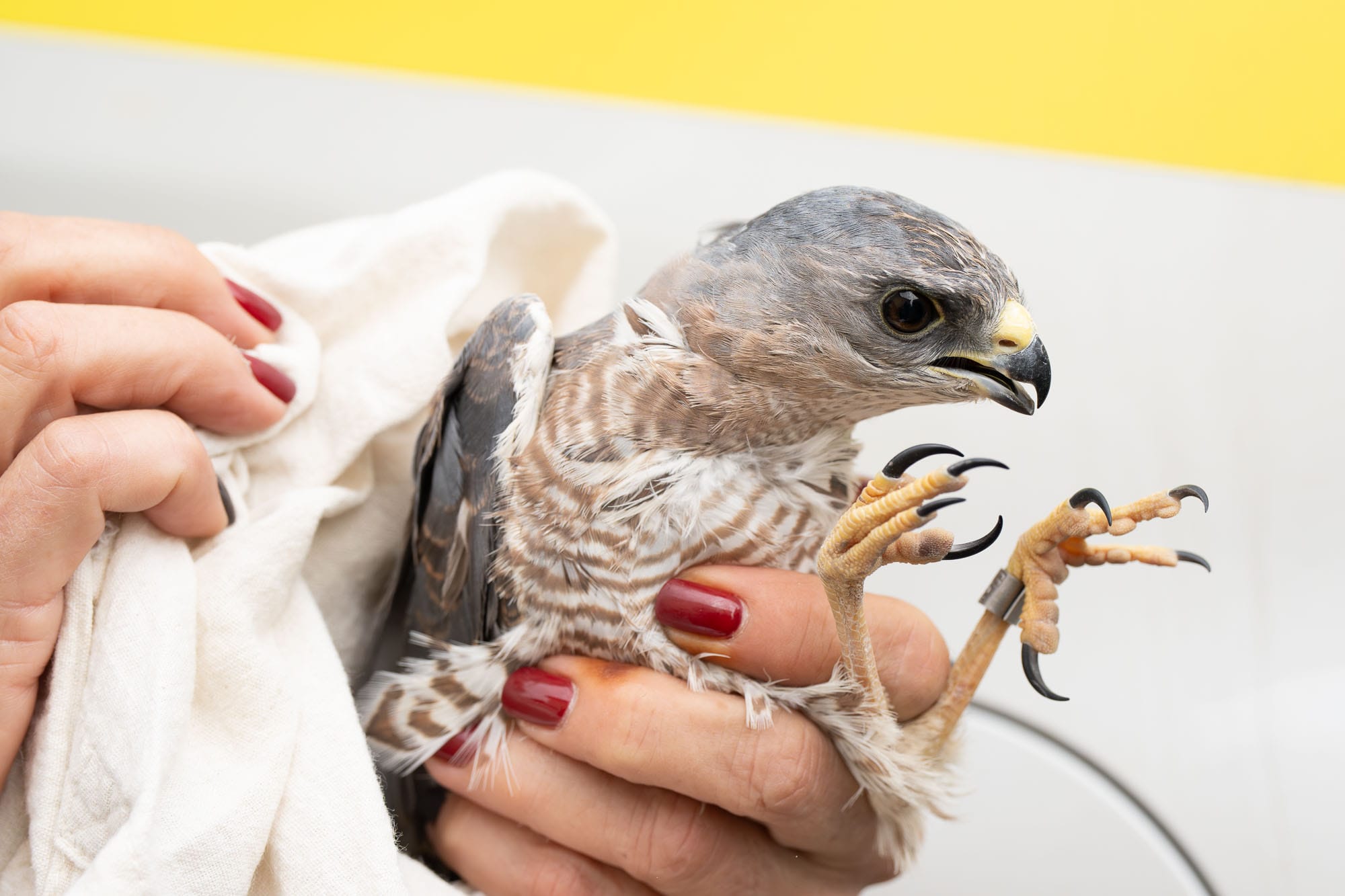
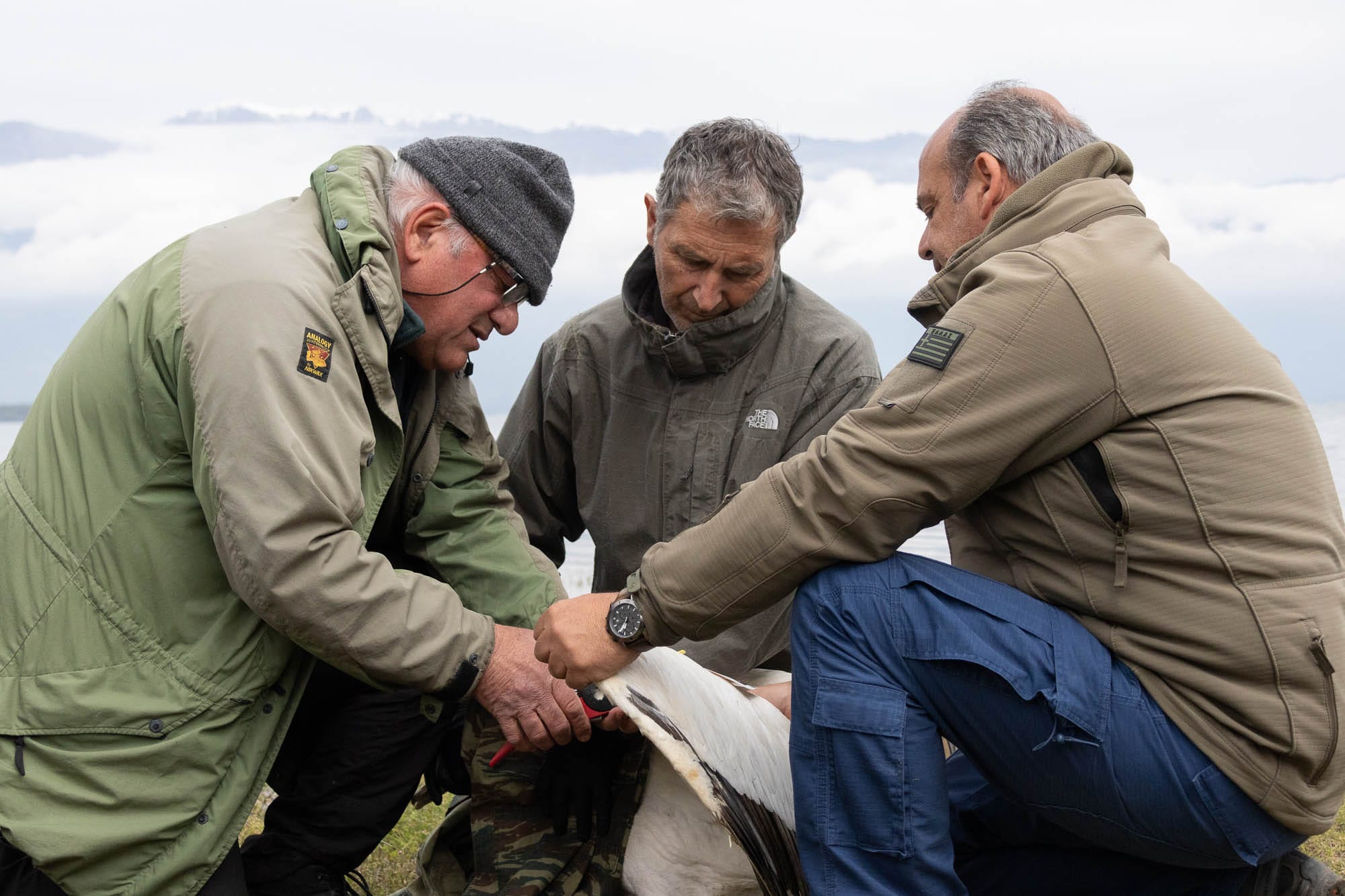
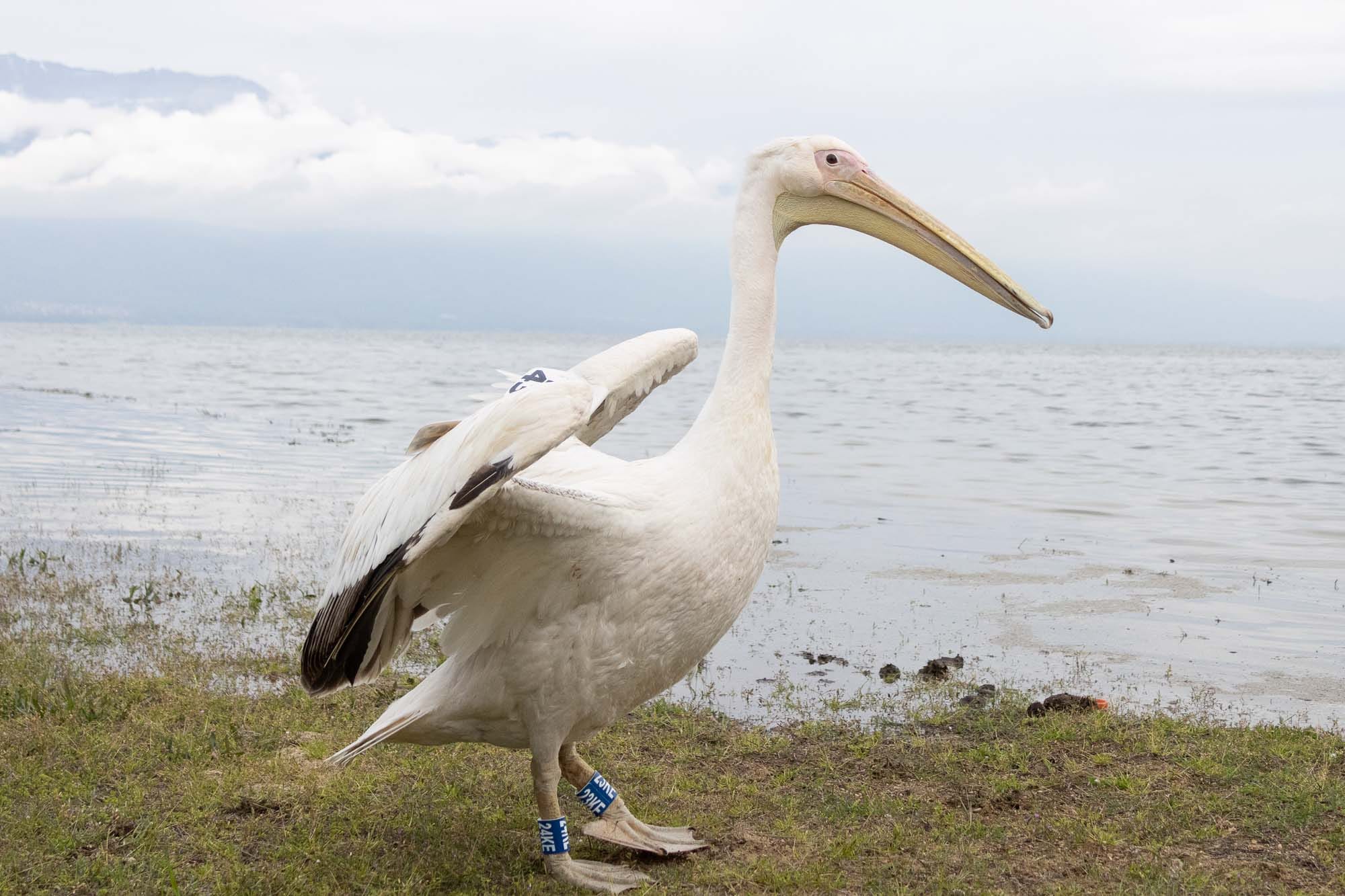
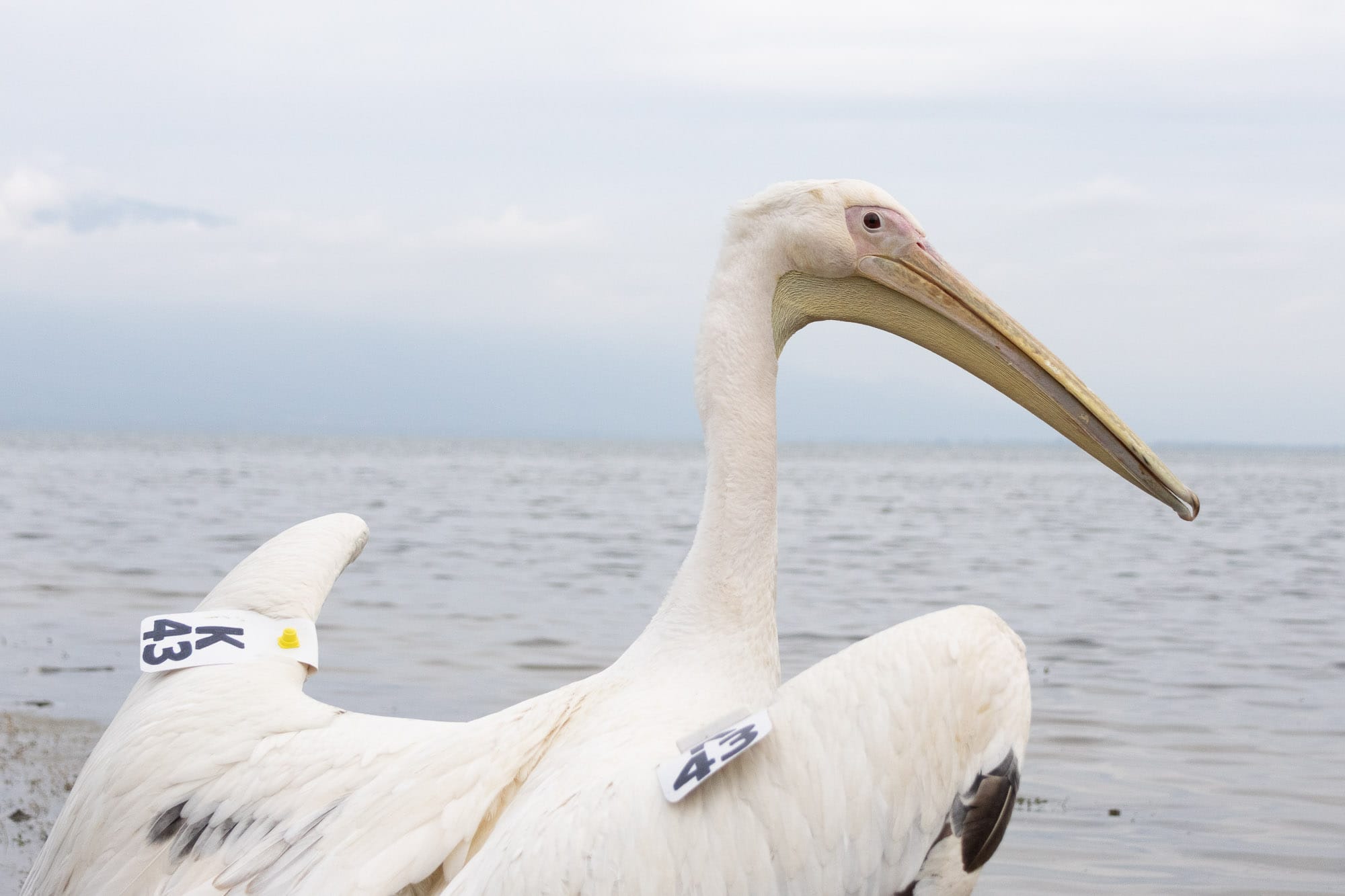
At the same time, the next day, on the morning of the release, specialized ringers and staff from the Organization for the Protection of the Natural Environment and Climate Change (O.FY.P.E.K.A.), from the Kerkini branch, proceeded with the ringing of the animals that were to be reintroduced into the wild. Some of them were fitted with special tracking transmitters, in order to systematically monitor their progress and well-being. The use of transmitters is particularly important for rare species, as in the event that inactivity is detected in the device by the tracking systems, scientists are immediately alerted, giving them the opportunity to intervene quickly if needed.
Lake Kerkini: Return to Freedom
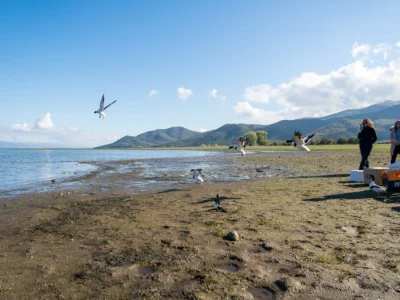
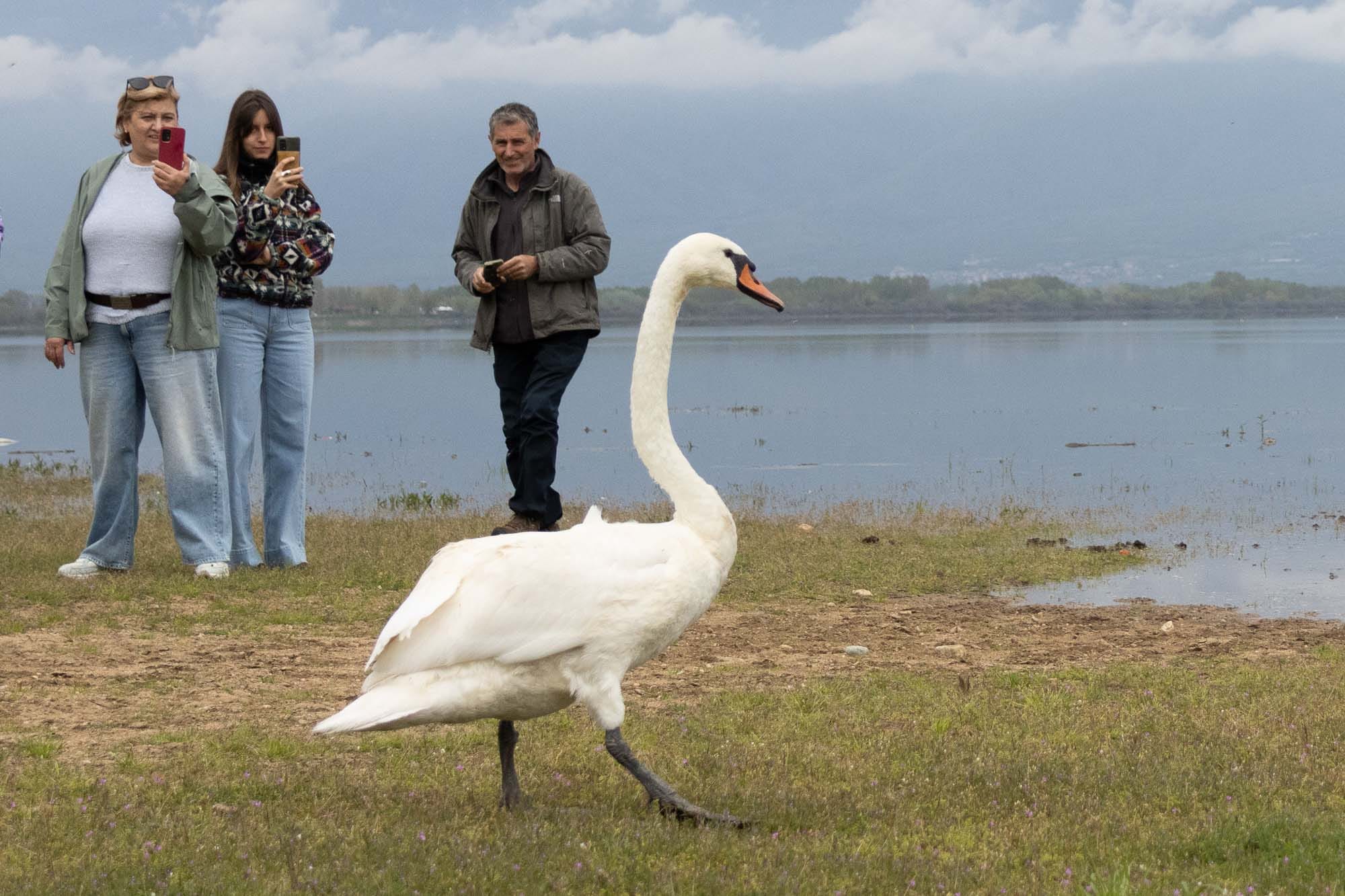
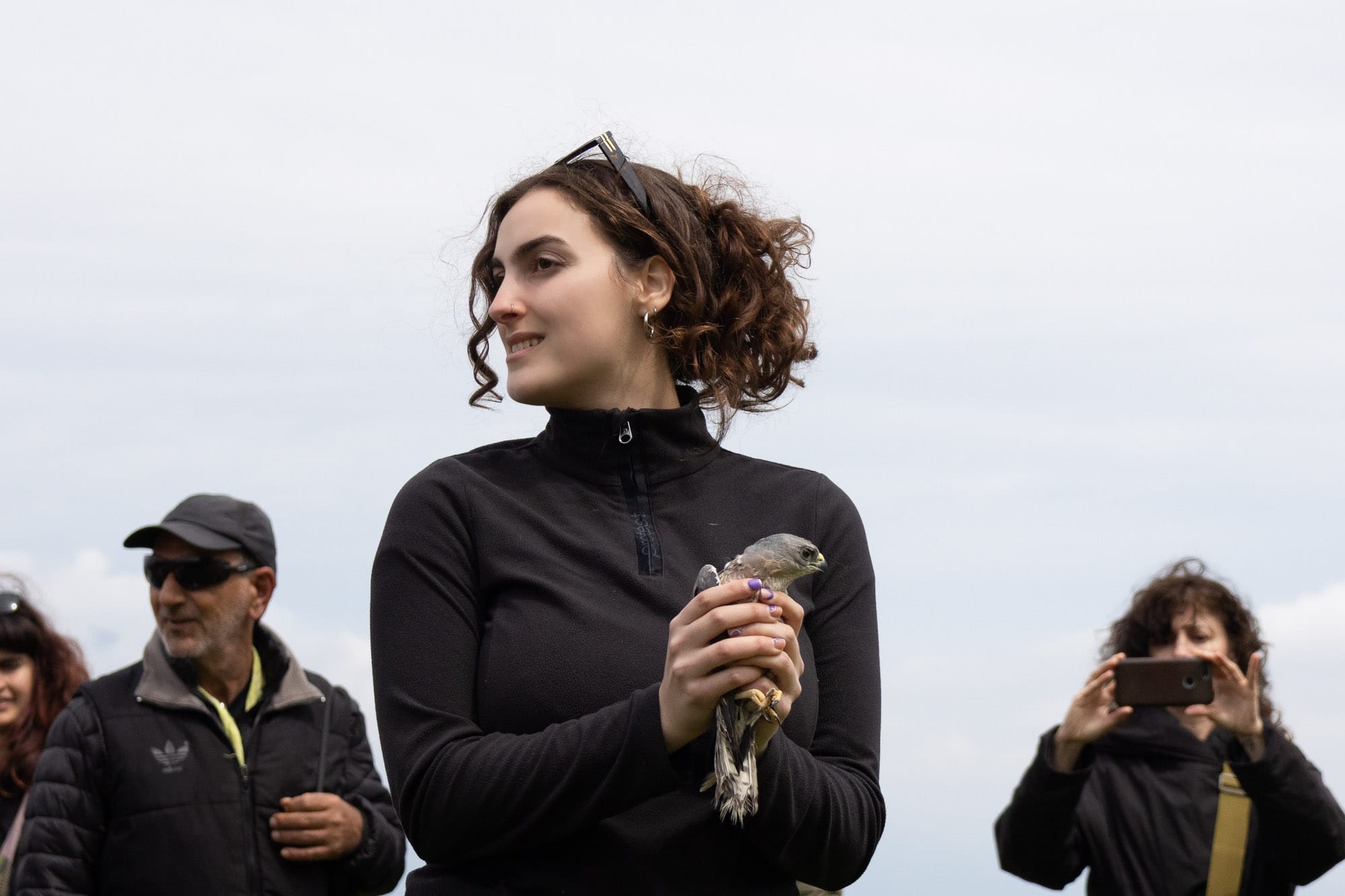
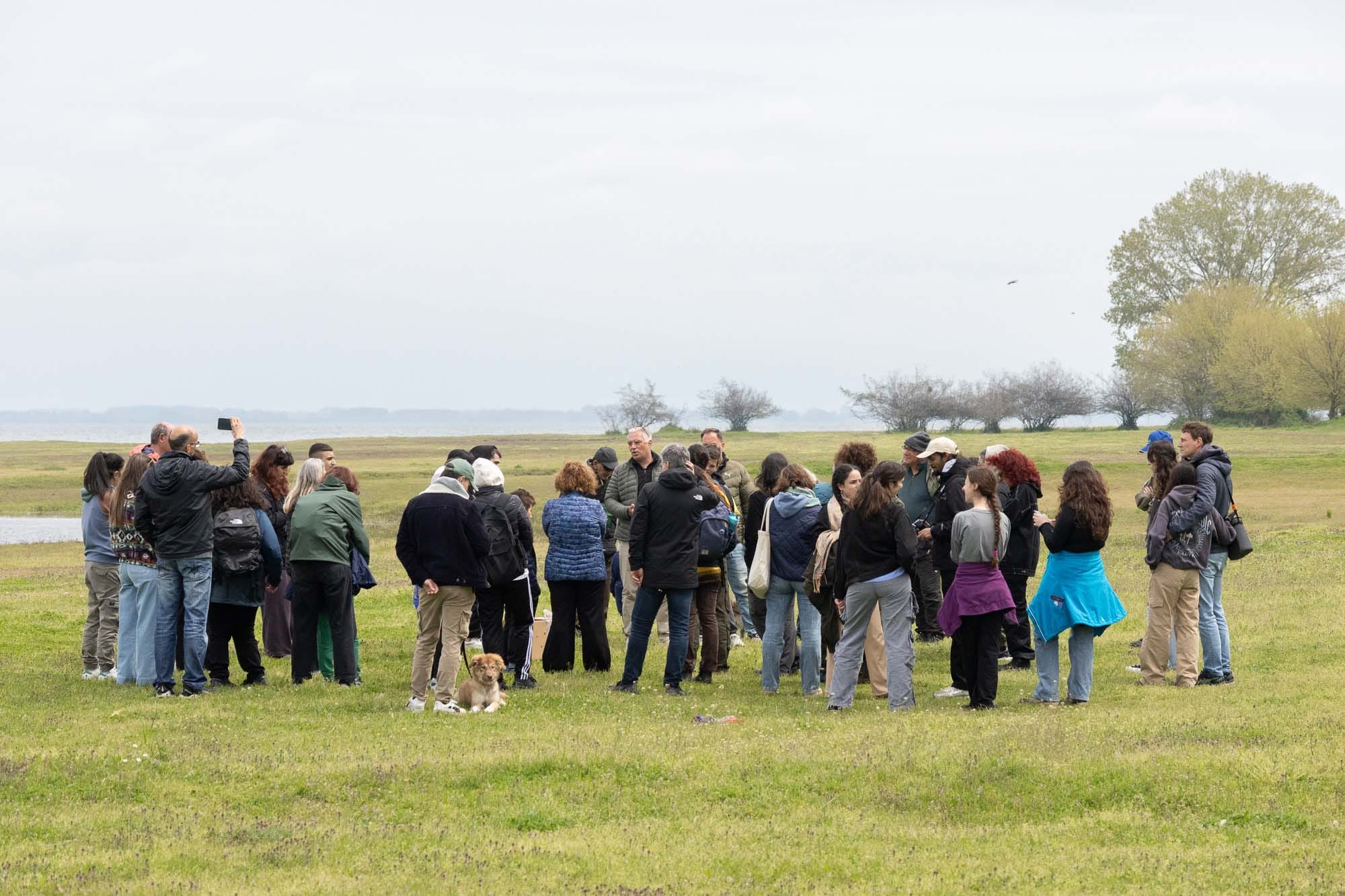
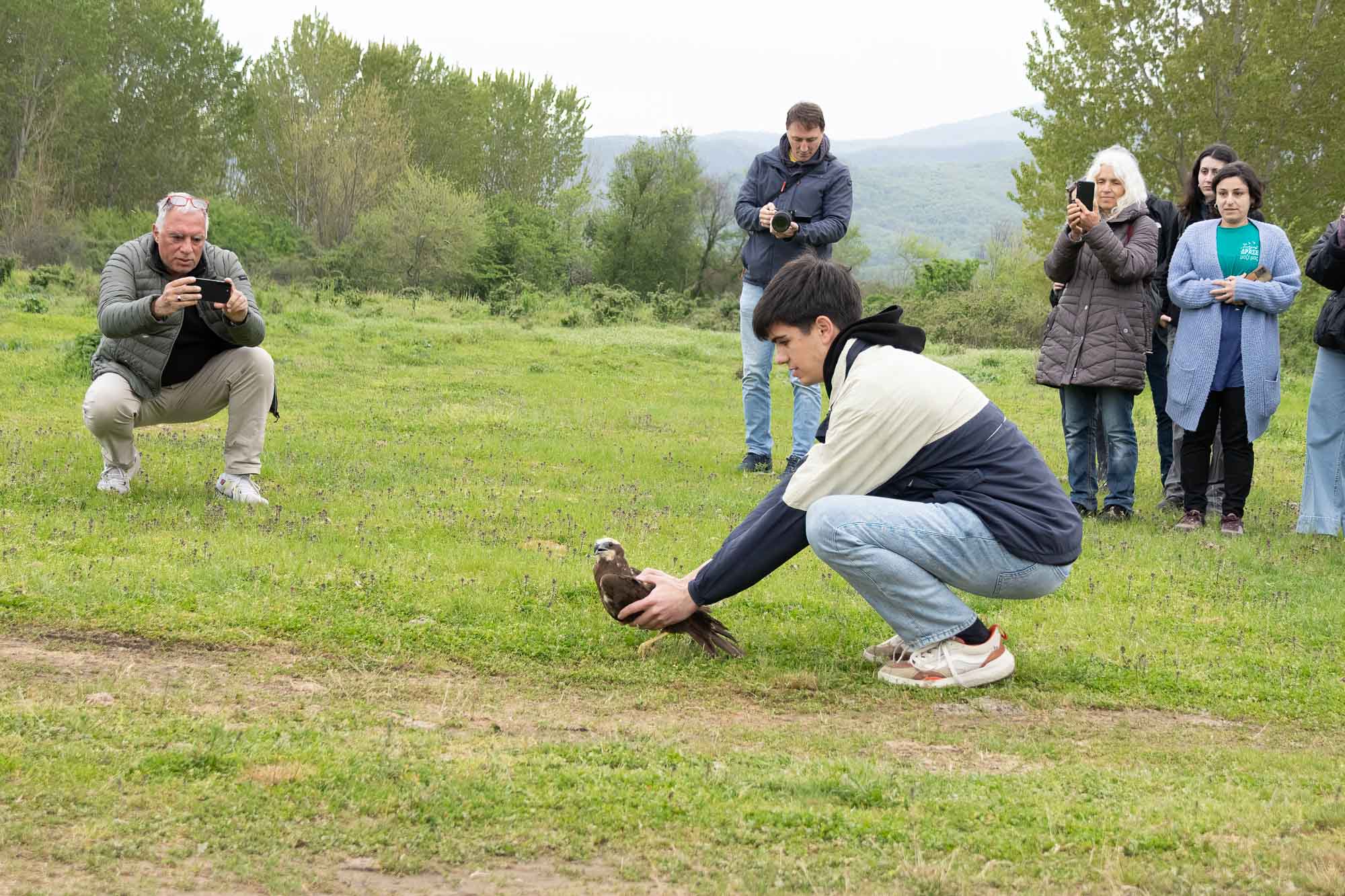
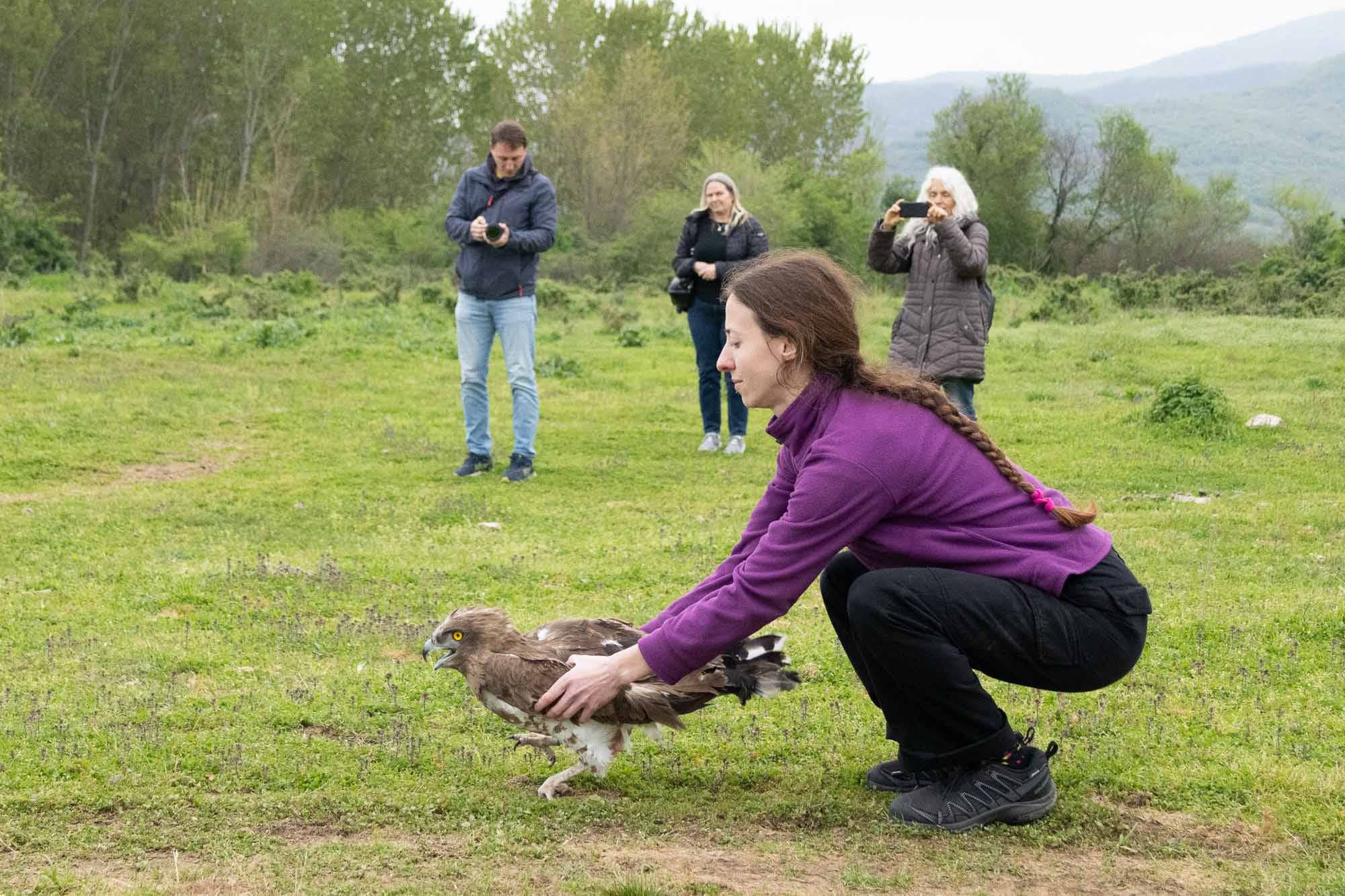
On Monday, April 14th, on the shores of Lake Kerkini, the release of the first birds took place, in the presence of a large crowd of volunteers and citizens who gathered at the designated spot near Koryfoudi and the village of Kerkini.
Specifically, the following returned to the wild:
- One Great White Pelican (Pelecanus onocrotalus)
- One Mute Swan (Cygnus olor)
- One Mallard (Anas platyrhynchos)
- One Scops Owl (Otus scops)
- One Short-toed Snake Eagle (Circaetus gallicus)
- One Black Stork (Ciconia nigra)
- One Levant Sparrowhawk (Accipiter brevipes)
- One European Honey Buzzard (Pernis apivorus)
- One Western Marsh Harrier (Circus aeruginosus)
The moment of reintroduction was particularly emotionally charged for the members and volunteers of the organizations. The birds flew freely, returning to their natural habitat after months of care and rehabilitation.

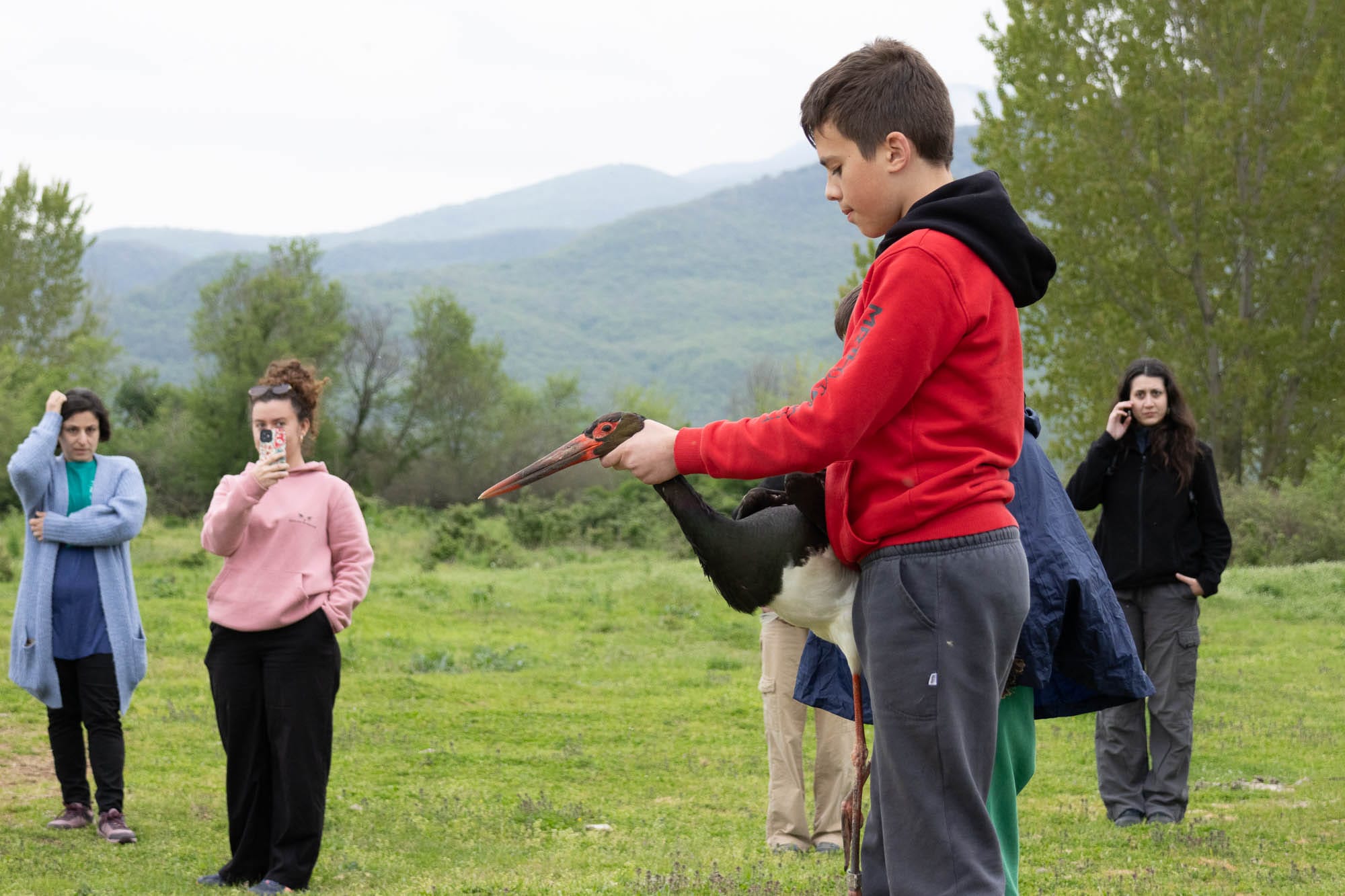
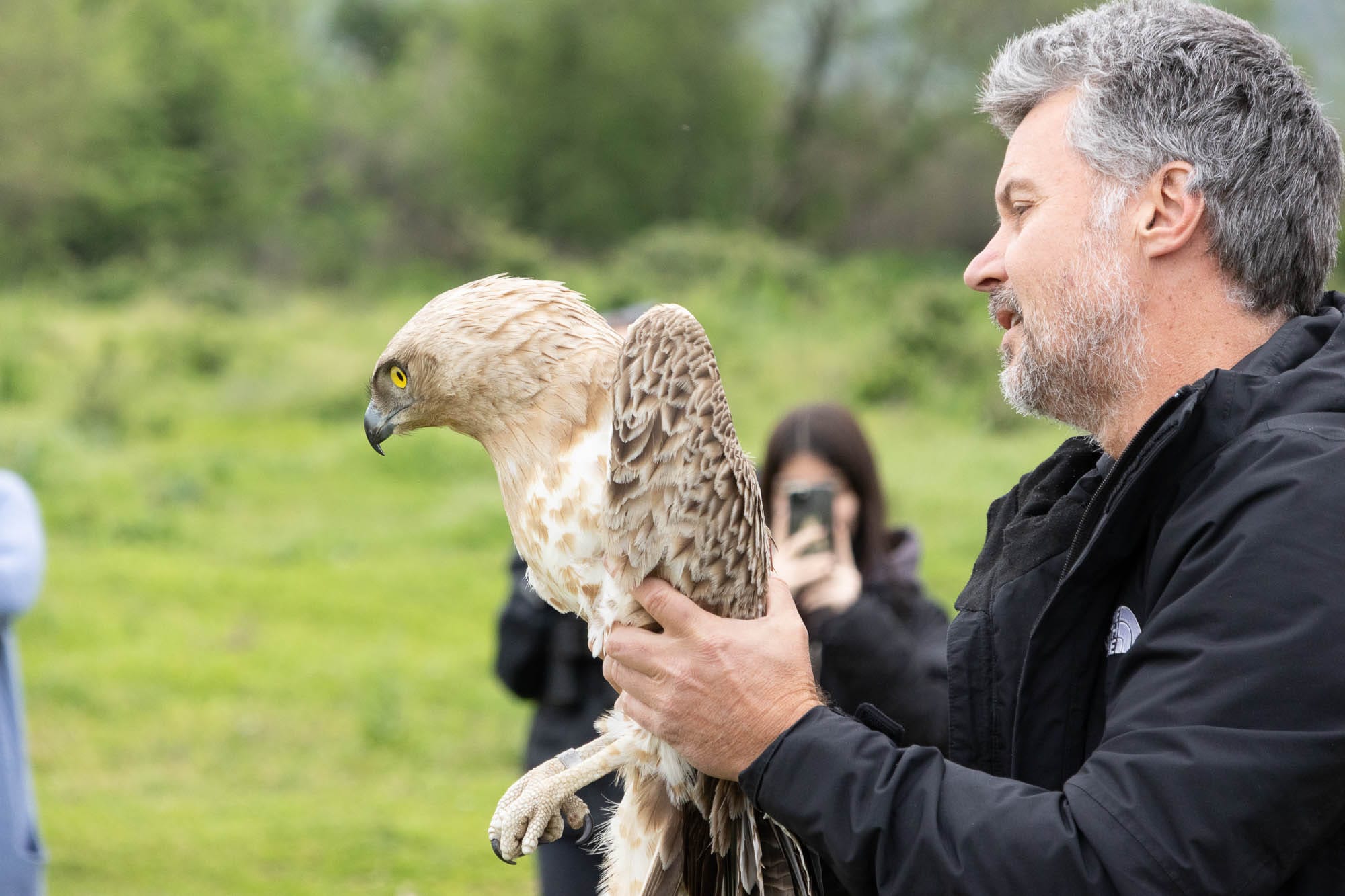
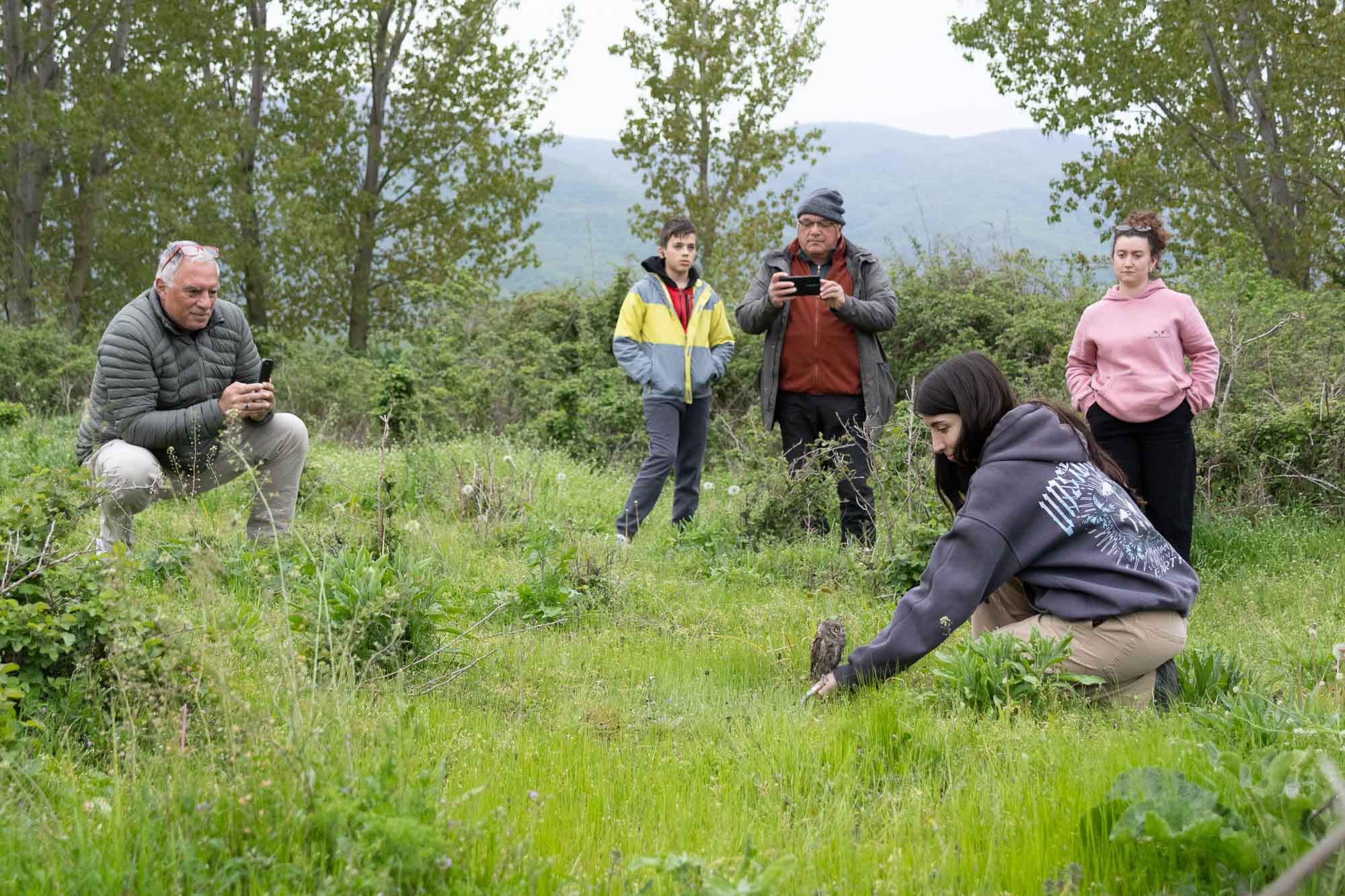
The action was covered by a three-member team from the Athens-Macedonian News Agency (Natasha Karathanos, Achilleas Chiras, Giannis Angelakis), who were on-site for a field report.
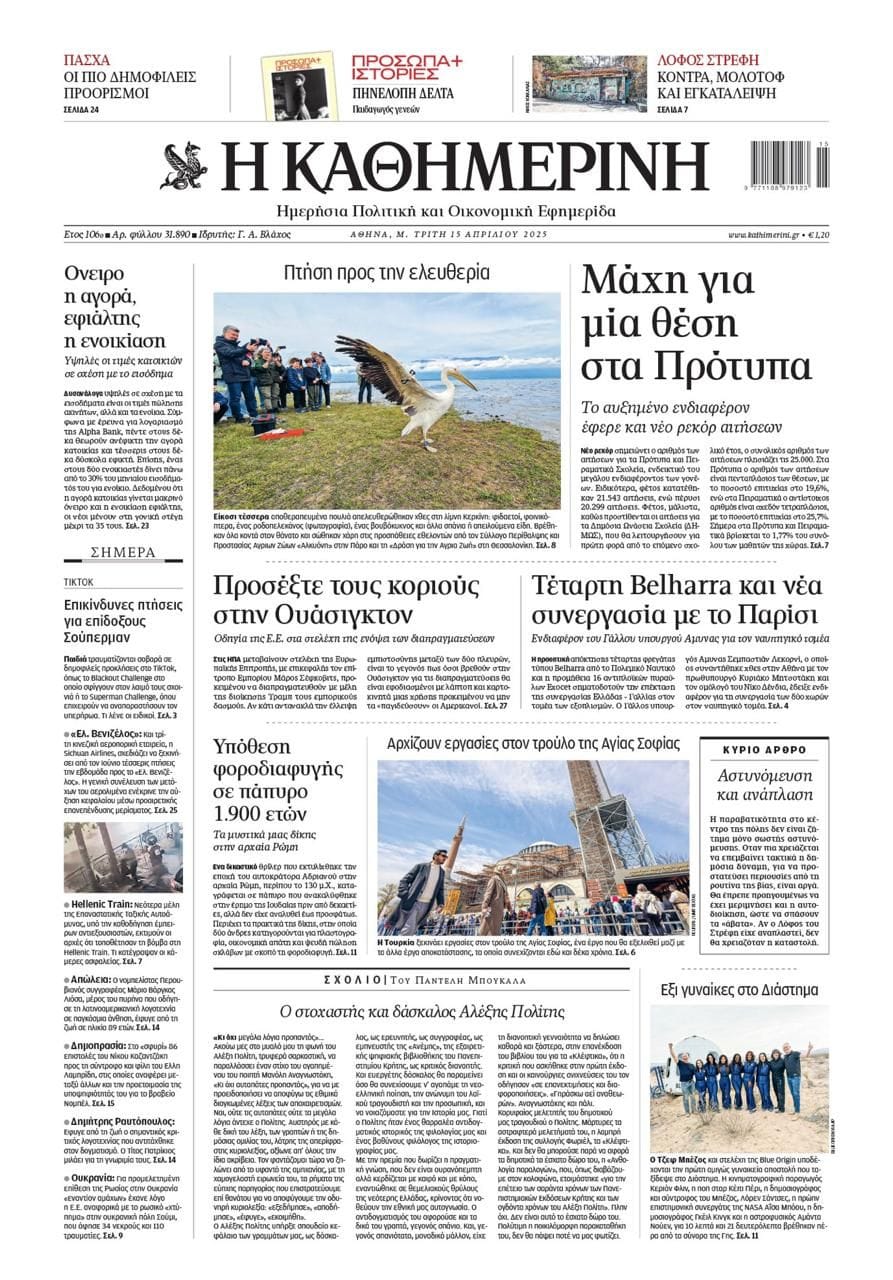
In fact, the action was featured on the front page of Kathimerini, proving the importance and public recognition of the work carried out by wildlife rehabilitation organizations.
Lake Koroneia: Release back to nature of four Flamingos
On Great Tuesday at Lake Koroneia, another important reintroduction took place in collaboration with Alkyoni. There, four flamingos (Phoenicopterus) were released: two adults (with pink hues) and two juveniles (with black-brown hues), who had spent months in Thessaloniki and Paros.
One of the adult male flamingos had been found shot in Northern Greece, in an incident that once again reminds us that poaching is a serious threat to the wildlife of Greece. The other three birds — two juveniles and one adult — had been found exhausted in the Cyclades and Macedonia. The release took place at a short distance from an existing flock of flamingos, and the birds quickly moved towards the group.
The two flamingos of the Action for Wildlife had recently been symbolically adopted by the Association of Professional Photographers and Videographers of Central Macedonia, the Photographers Union of Central-Western Macedonia, and the Capture Conference.
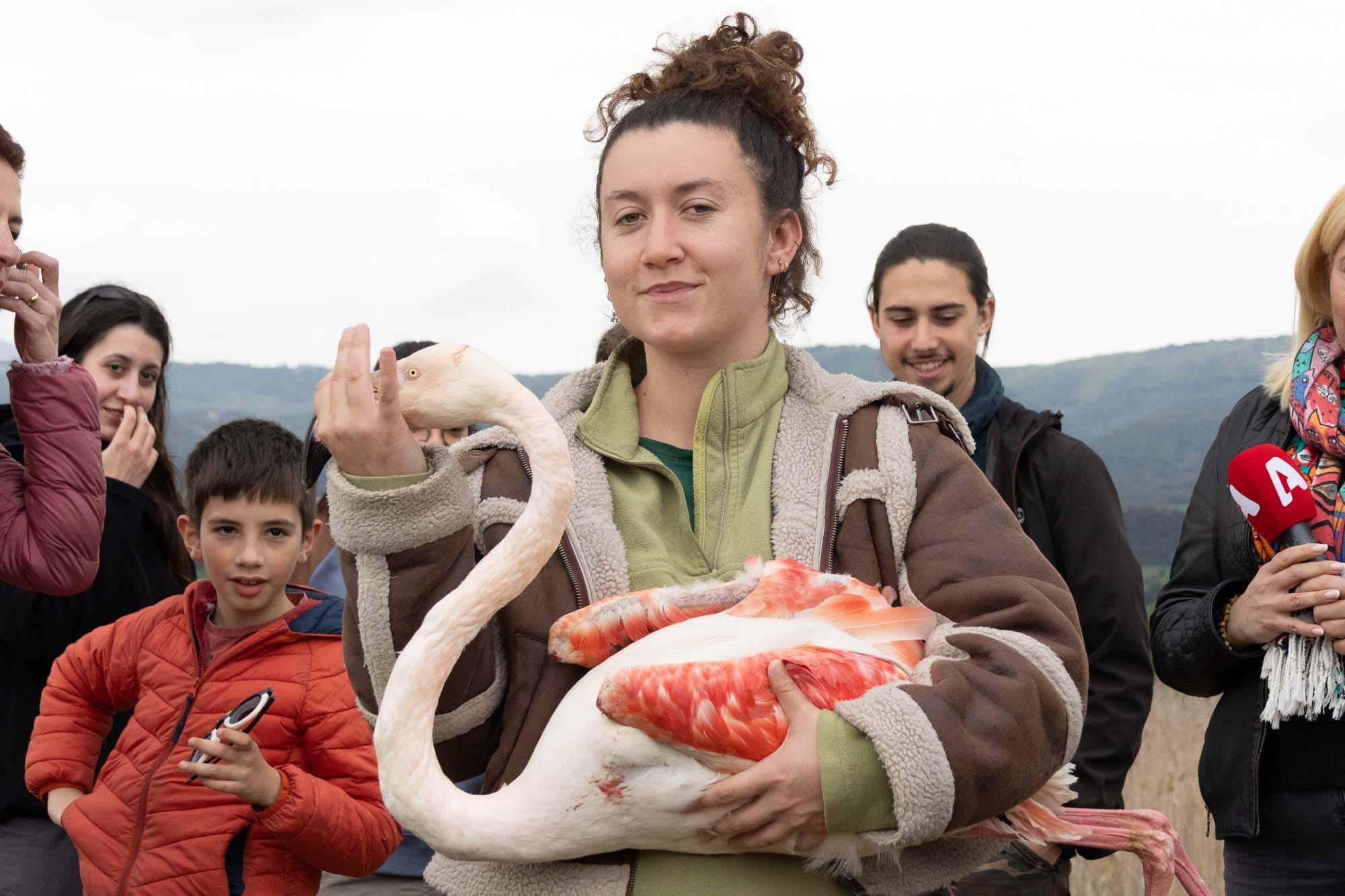
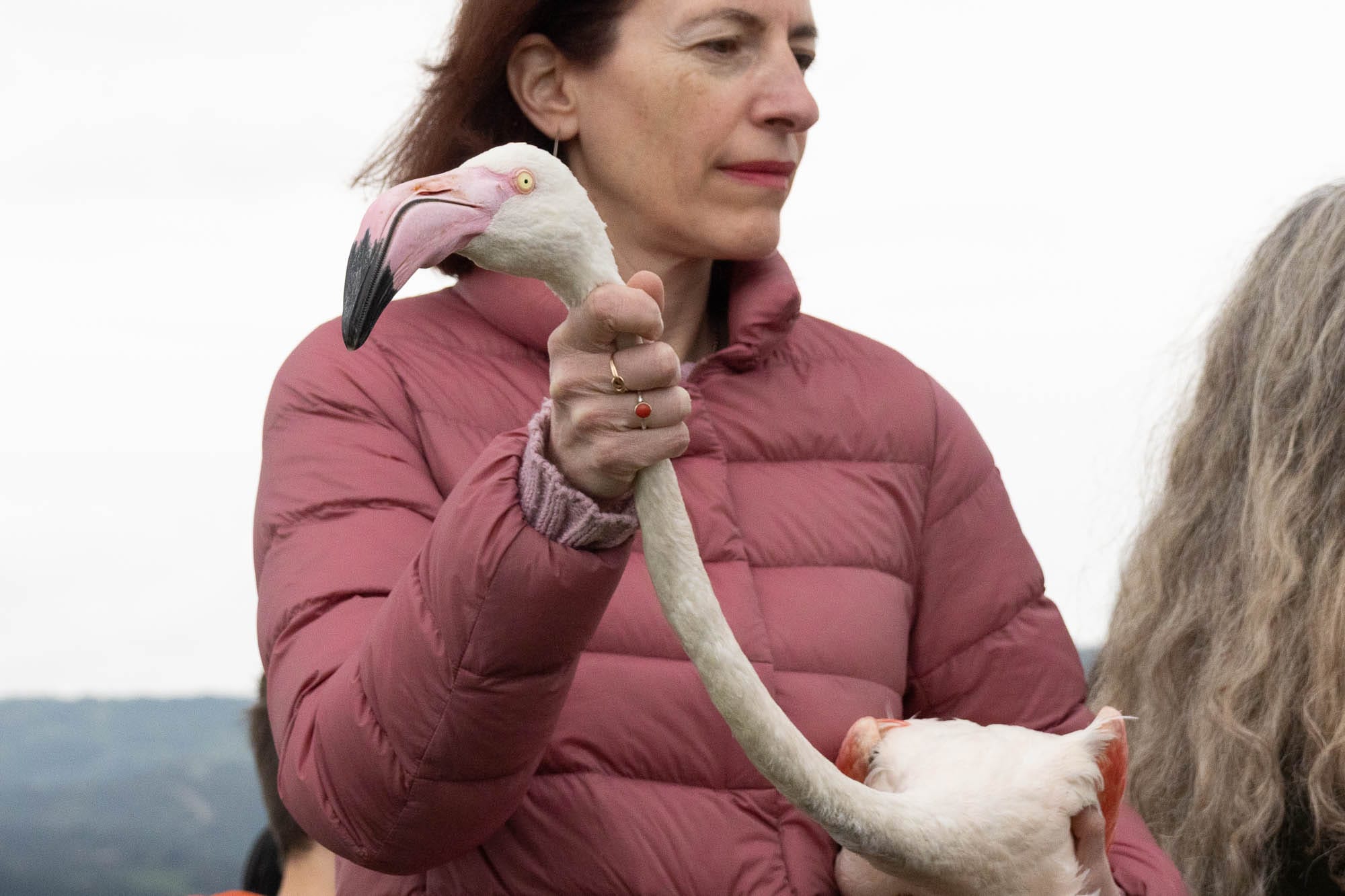
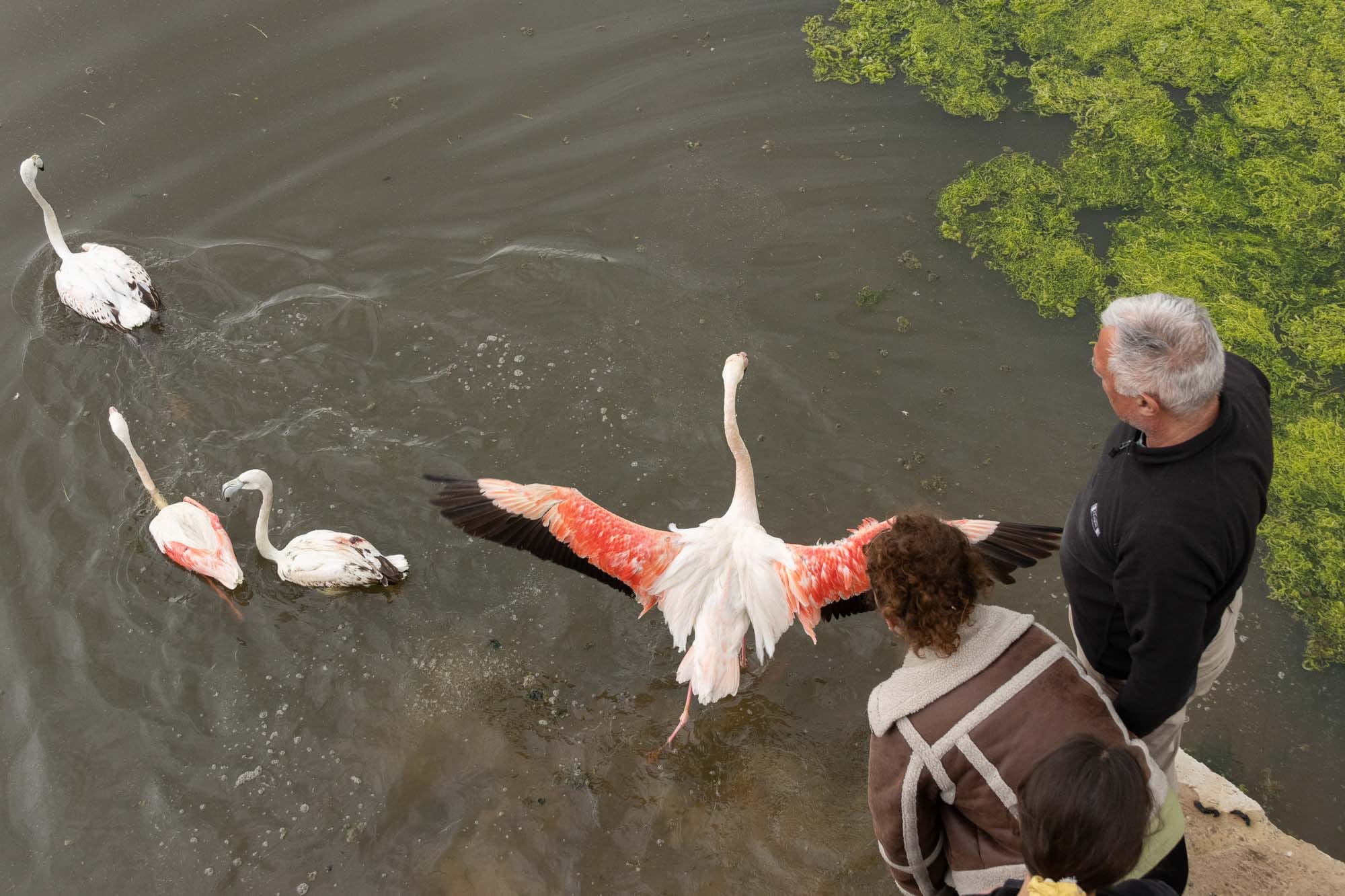
The moment was covered by journalist Aphrodite Spilioti and a television crew from the ALPHA station, with the report being broadcasted in the news bulletin.
The common goal: Return to nature
Every release back to nature is the ultimate goal of wildlife care. It is the moment when an injured, sick, or exhausted creature, after prolonged care, is returned free to its natural habitat – where it truly belongs.
We warmly thank all those who contributed – partner organizations, journalists, volunteers, and supporters.
Stay tuned to drasi-agriazoi.gr and our social media for more actions and updates!