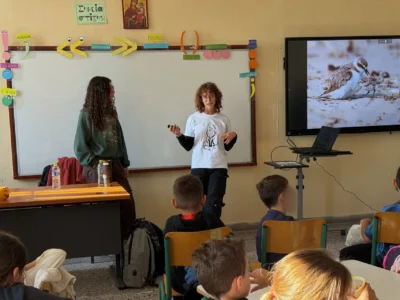
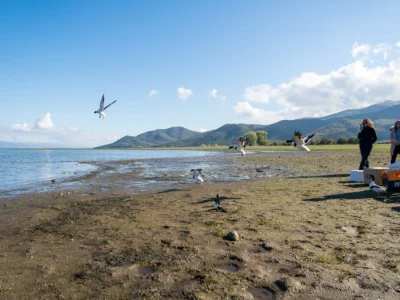
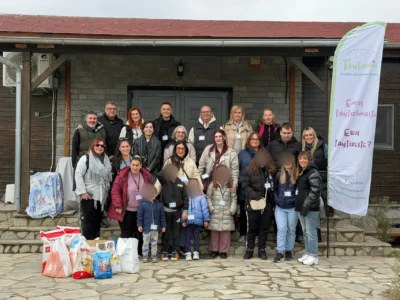
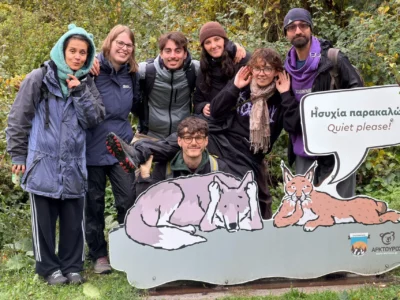
On the occasion of World Wildlife Day, Action for Wildlife visited the Municipal Library of Kalohori for a special educational activity with students from the 2nd Primary School of Kalohori. The meeting took place on Wednesday, March 4, 2026, with around 40 children from the 4th and 5th grades participating in a morning full of questions, curiosity, and meaningful contact with the world of Wild Animals.
The presentation focused on fundamental but critical issues concerning wildlife and its relationship with humans. The children had the opportunity to learn which animals are considered wild, what wildlife rehabilitation means, when human intervention is truly necessary, and the most common reasons an animal ends up in a wildlife care center. Special emphasis was placed on human-caused threats, as well as on how everyone—both children and adults—can help reduce everyday risks in the neighborhood, at school, and at home.
A special part of the activity was dedicated to what we should do when we encounter an injured Wild Animal. Proper information at this point is crucial, as very often a good intention is accompanied by incorrect handling that may increase stress or danger for the animal. Through the discussion, the importance of staying calm, observing carefully, and contacting specialized organizations such as Action for Wildlife was highlighted, so that every incident can be handled in the safest possible way for the animal itself.
The children’s response was truly moving. Their questions were constant, thoughtful, and filled with genuine interest in Animals and the natural environment. It was not simply a typical school presentation, but a real discussion that showed how important it is for knowledge about wildlife to reach younger ages. When children understand early on what respect for Wild Animals means, how wildlife rehabilitation works, and why human activity directly affects their lives, the foundations are built for a more aware and responsible society.
Action for Wildlife warmly thanks the Municipal Library of Kalohori and the Deputy Mayor’s Office for Culture & Public Welfare Structures of the Municipality of Delta for the invitation, hospitality and collaboration, as well as the teachers and students of the 2nd Primary School of Kalohori for their participation and interest. Initiatives like this clearly demonstrate that environmental education is not secondary, but an essential tool for raising awareness, bringing children closer to nature and helping them understand that the protection of wildlife is a responsibility we all share.
For Action for Wildlife, educational outreach in schools and local communities is an important part of its mission. The rehabilitation and release of Wild Animals does not end with receiving and caring for an injured animal, but is closely connected to prevention, knowledge, and the responsible attitude of citizens toward wildlife. Every child who learns today how to respect and protect a Wild Animal is a future adult who can meaningfully contribute to the coexistence of humans and nature.
This activity left its own positive impact and confirmed the great value of such meetings when they are carried out with proper preparation, a spirit of cooperation, and genuine interest. Action for Wildlife continues its work every day, both in the field of wildlife rehabilitation and in public awareness, with the goal that every Wild Animal receives the care and the opportunity it needs to return where it belongs: to nature.