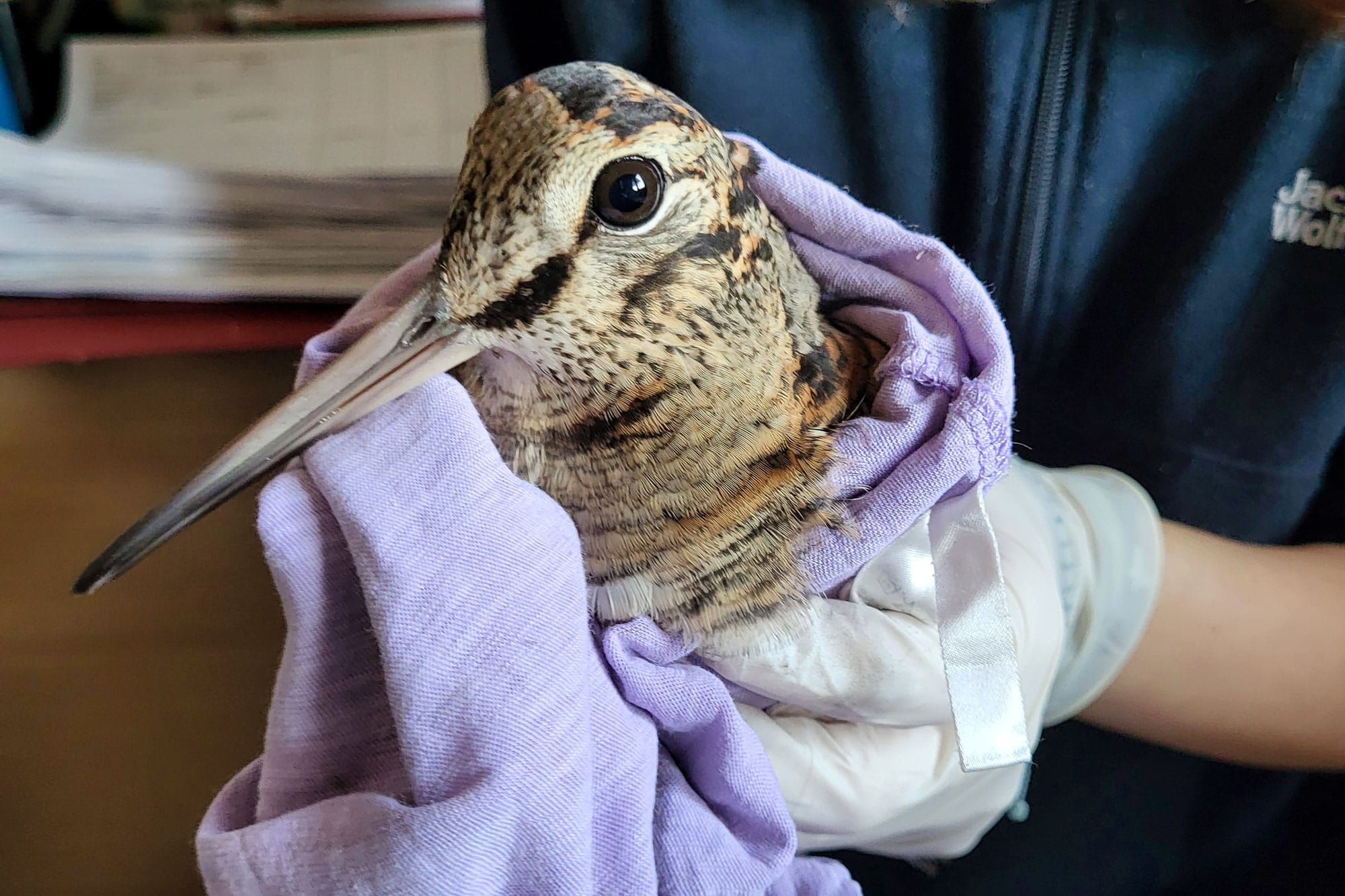
Life at the Action for Wildlife Center often reveals a harsh reality: birds collide with windows in numbers that are hard to imagine.
In recent days, we have received two characteristic incidents. A Woodcock arrived after colliding with a window, with a mild corneal injury in one eye. With medication and monitoring, it recovered and was released back into the wild within a few days. At the same time, however, a tiny Goldcrest — a species that, due to its very small size, many people seeing it for the first time mistake for a nestling rather than an adult — also struck a window and showed severe debilitation and neurological symptoms. Despite our efforts, it did not survive.
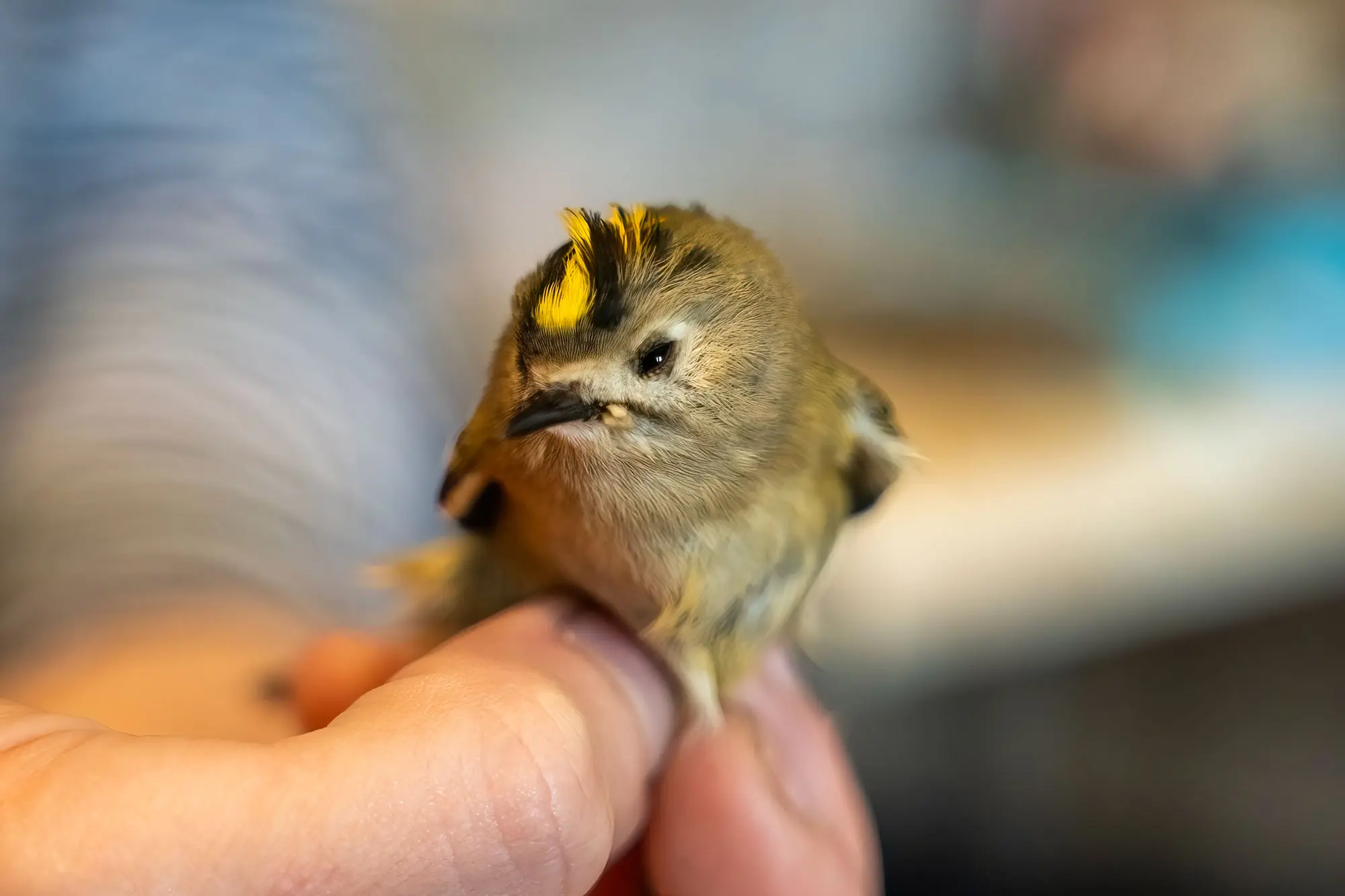
These two incidents are not random. They are part of a much larger problem that is now scientifically documented. These events are not the exception. According to a study published in The Wilson Journal of Ornithology and republished by National Geographic in 2024, window collisions cause 1.28 to 3.46 billion bird deaths annually in the U.S. alone — a number 350% higher than previous estimates. Additionally, as The Guardian reports, 40% of birds survive window collisions, researchers say — a fact that suggests mortality rates are far higher than we previously believed.
Why do birds crash into windows?
Glass presents a “huge, silent danger” to birds for two main reasons:
1. Reflection Many windows reflect the sky or vegetation. For a bird flying at speed, this appears as a continuation of the natural landscape — not as an obstacle.
2. Transparency Birds do not perceive transparency the way we do. If they see light or a plant on the other side, they assume they can fly through.
In cities, the problem is intensified by nighttime lighting, glass façades, and dense building structures. In autumn, when large populations of small migratory species pass through our cities, the danger becomes even greater. A single collision can prove fatal, even if the animal initially appears to recover.
The Woodcock was fortunate enough to return to the wild. The Goldcrest was not. And every such loss reminds us how fragile the creatures that share our space truly are — and how important it is to make the urban landscape safer for them, with simple measures such as deterrent stickers on windows, reduced nighttime lighting, and public awareness.