An international appeal urges European Union Member States to maintain strict protection for the Wolf and to invest in coexistence with rural communities.
Twenty Greek Environmental Organizations address an appeal to the Greek Government not to downgrade the wolf’s protection status and to intensify efforts to achieve coexistence between wolves and rural communities, by co-signing an international letter supported by a total of 213 organizations. The letter calls on EU Member States not to downgrade the wolf’s protection status and to ensure that measures are taken to promote coexistence.
The letter is addressed to the EU Ministers of Environment and is copied to the Ministers of Agriculture and the Nature Directors of the Union.
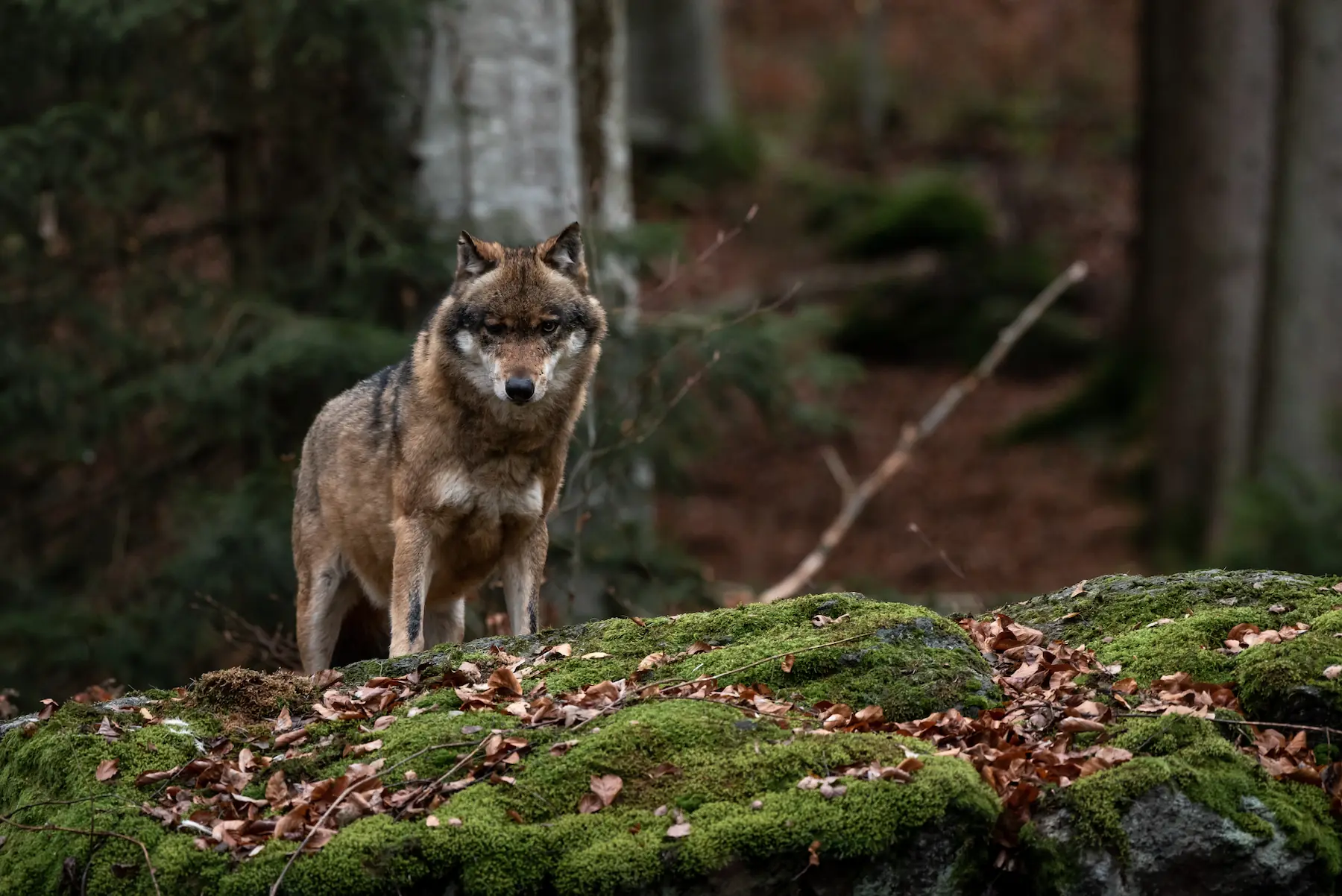
The letter is co-signed by 20 Greek Environmental Organizations and bodies / Article photo: Miller_Eszter Post photo Miller_Eszter
It is reminded that in December 2024, approximately one year ago, the wolf’s protection status under the Convention on the Conservation of European Wildlife and Natural Habitats (Bern Convention) was downgraded following a proposal by the European Commission. This action has tarnished the EU’s image as a global leader in nature conservation.
This politically motivated and scientifically unfounded rollback of wolf protection was widely criticized by scientists, conservation experts, and environmental organizations. Science is clear: while wolf populations have recovered in some EU countries thanks to protection, as well as socio-economic developments and land-use changes, the species continues to have an unfavorable conservation status in six out of the seven EU biogeographical regions (data from the Article 17 reporting period of the Habitats Directive 2013–2018).
It is noted that the European Commission has confirmed that Member States may maintain stricter protection for the wolf, provided that this is declared at the time of notification of transposition measures.
As emphasized in the joint letter co-signed by 20 Greek Environmental Organizations, the protection of large carnivores must evolve toward an innovative model that integrates prevention, fair compensation, stakeholder participation, and scientifically grounded governance, supported by public information and awareness-raising actions.
“Wolf protection in Europe is not only a matter of ecological importance, but also a reflection of our commitment to biodiversity conservation and to the values of coexistence and tolerance. Wolves are an integral part of Europe’s natural heritage, playing a vital role in maintaining ecosystem balance and biodiversity. The return of the wolf to parts of Europe where it had previously been eradicated represents a major conservation success that must not be put at risk,” the joint letter to Member State governments stresses.
The joint European letter is co-signed from Greece by the following:
- ΑΝΙΜΑ
- ΑΡΚΤΟΥΡΟΣ
- ΑΡΧΕΛΩΝ, Σύλλογος για την Προστασία της Θαλάσσιας Χελώνας
- Action for Wildlife
- Ελληνική Εταιρεία Περιβάλλοντος και Πολιτισμού
- Ελληνική Εταιρία Προστασίας της Φύσης (ΕΕΠΦ)
- Ελληνική Ορνιθολογική Εταιρεία
- Ελληνικό Δίκτυο «Φίλοι της Φύσης»
- Εταιρία Προστασίας Βιοποικιλότητας Θράκης
- Εταιρία Προστασίας Πρεσπών
- Καλλιστώ, Περιβαλλοντική Οργάνωση για την Άγρια Ζωή και τη Φύση
- Οικολογική Εταιρεία Ανακύκλωσης
- Πανελλαδική Φιλοζωική Περιβαλλοντική Ομοσπονδία (ΠΦΠΟ)
- Greenpeace
- i-Sea, Εταιρία για την Προστασία των Υδάτινων Οικοσυστημάτων
- MedINA, Μεσογειακό Ινστιτούτο για τη Φύση και τον Άνθρωπο
- MEDASSEΤ, Μεσογειακός Σύνδεσμος για τη Σωτηρία των Θαλάσσιων Χελωνών
- Mom, Εταιρεία για τη Μελέτη και Προστασία της Μεσογειακής Φώκιας
- reLife Earth
- WWF Ελλάς
Questions & Answers on the wolf’s protection status in the European Union
What does the downgrading of the wolf’s protection status mean, and what can be done to maintain strict protection?
Political context
For decades, wolves were strictly protected under the Bern Convention and the European Union Habitats Directive (EU). This allowed wolf populations to recover from the brink of extinction and represented one of the EU’s most remarkable successes in wildlife conservation.
The EU’s shift regarding wolf conservation began in September 2023, when the President of the European Commission, Ursula von der Leyen, spoke in favor of downgrading the protection status following the death of her pony, Dolly, which was reportedly attributed to a wolf attack. In December 2023, the European Commission proposed downgrading the species under the Bern Convention, citing livestock damage as justification. This was followed by a consultation process that ClientEarth considered flawed and which was investigated by the European Ombudsman (the case was closed in 2025 due to parallel judicial proceedings[1]). Just one year earlier, the EU had rejected the same proposal due to a lack of scientific basis.
In September 2024, a majority of Member States agreed to adopt the Commission’s proposal to downgrade the wolf’s protection status under the Bern Convention. A few months later, in December 2024, the Standing Committee of the Bern Convention voted in favor of the downgrade.
Once international barriers were removed, the way was opened for corresponding changes in EU law. In May 2025, following votes in the European Council and the European Parliament, the EU downgraded the wolf’s protection status under the Habitats Directive. The amendment entered into force on 14 July 2025, and Member States must transpose it by 15 January 2027.
From a conservation perspective, this politically driven decision is expected to undo decades of progress. Although the strict protection provided by the Habitats Directive allowed wolf populations to recover, their status remains vulnerable across most of Europe. Scientific evidence shows that wolf recovery is still ongoing and that the core objectives of both the Bern Convention and the Habitats Directive to restore threatened species have not yet been achieved. The downgrade grants Member States greater flexibility to “manage” populations, including subjecting them to hunting regulations, which will inevitably threaten the species. The Commission itself confirms that there is no evidence that hunting the species reduces attacks on livestock.
For recent decades, the wolf has been strictly protected across most of the EU. What does this mean?
Across most of the EU, the wolf is strictly protected under Annex IV of the Habitats Directive.
This means that Article 12 of the Directive applies, which prohibits, among other things:
- killing and capturing animals
- disturbance, particularly during breeding and rearing periods
- destruction of breeding sites and resting places
Article 12 also requires Member States to establish a monitoring system for incidental capture or killing and, based on collected information, to take further research or conservation measures to ensure that such incidents do not have significant negative impacts on the species.
Derogations are allowed only in very specific cases defined in Article 16, for example:
- protection of wild fauna and flora and natural habitats
- prevention of serious damage, particularly to crops, livestock, and property
- public health and safety or other overriding public interests
However, no derogation may jeopardize the achievement of a favorable conservation status.
What are the consequences of downgrading from “strictly protected” to “protected”?
The 2025 amendment moved the wolf from Annex IV to Annex V of the Habitats Directive. Unlike Annex IV species, which are “strictly protected,” Annex V species are simply “protected.”
For species listed in Annex V, Article 14 of the Habitats Directive applies. This means the following:
If deemed necessary on the basis of the available data, Member States shall take measures to ensure that the capture, exploitation, or killing of wolves is compatible with maintaining their favorable conservation status.
Measures may include:
- temporary or local bans on taking specimens
- hunting regulations that take population conservation into account
- Establishment of a permit system for the taking of specimens or the setting of quotas (quotas)
In practice, this means that an exemption or derogation is no longer required to kill a wolf. Instead, wolves may be hunted under a hunting license during a designated hunting season, taking population conservation into account.
Does this affect the obligation to achieve or maintain a favorable conservation status?
EU Member States must continue to monitor the development of wolf populations and ensure that wolf hunting does not conflict with maintaining or achieving a favorable conservation status.
Member States must also submit a report to the Commission every six years. The most recent report was due in July 2025, and the next one is scheduled for July 2031. If the report shows that the species is not in a favorable conservation status in a Member State, hunting cannot be permitted unless a derogation applies, as was also the case in the past when the wolf was strictly protected.
The Commission confirmed the possibility for Member States to maintain a stricter protection status for the wolf in a statement made at Coreper on 2 May 2025, provided that this is indicated at the time of notification of the transposition of EU legislation into national law. According to some media reports, Poland, Portugal, and Spain had stated their intention to make use of this opportunity to keep the wolf under a strict protection regime.
In June 2025, the European Court of Justice issued a preliminary ruling in a case referred by an Estonian court (case C-629/23, MTÜ Eesti Suurkiskjad), which may provide additional clarification on (1) the geographical scale at which favorable conservation status must be assessed and (2) the role of socio-economic aspects in that assessment. The Court ruled that:
(1) The conservation status of a species must be assessed primarily and obligatorily at the local and national levels, and the species must be able to fulfil its ecological function within the territory concerned. However, cross-border situations within the biogeographical region may be taken into account when the population extends beyond national borders.
(2) Economic, social, and cultural requirements, as well as regional and local characteristics, may play a role, but they cannot be taken into account to determine that a species has achieved a favorable conservation status.
Will the downgrade of the wolf’s protection status affect the funding available for human–wolf coexistence?
It will remain possible to allocate European funding, for example from the Common Agricultural Policy or the LIFE programme during the 2025–2027 period, for the development and implementation of coexistence measures. Conservation and coexistence remain priorities, and it is important to stress that wolves will not be eradicated and that efforts to implement preventive measures must continue. This is all the more crucial given that population control through killing can, in some cases, even lead to an increase in attacks.
However, it is important to recognize that downgrading the wolf’s protection status in national legislation may have implications for the funding of coexistence measures at country level, particularly with regard to compensation for affected livestock farmers. For example, in Croatia, the change in status means that the transfer of the existing compensation system from the responsibility and budget of the Ministry of Environment is being considered, which could limit the availability of compensation if the new system operates differently.
After 2027, the new long-term EU budget (the Multiannual Financial Framework – MFF) for the period 2028–2034 will apply. The Commission’s proposal for the new MFF предусматриes the integration of the LIFE programme into the European Competitiveness Fund. If approved, this would effectively mean the discontinuation of the programme and, in all likelihood, the end of EU financial support for coexistence measures.
Why are the regular reporting requirements, as set out in Article 17 of the Habitats Directive, even more necessary now that the wolf is only “protected”?
Hunting quotas will be set on the basis of the favorable reference value, which is the minimum number of individuals required to maintain a favorable conservation status. The favorable reference value is determined every six years in accordance with the reporting obligations set out in the Habitats Directive. Given that populations can fluctuate significantly over a six-year period, especially where hunting is permitted, regular review of quotas is recommended, ideally on an annual basis, through a transparent, consistent, and rigorous monitoring process. In addition, quotas are expected to be very low, as most populations had not reached a favorable conservation status in 2019. In this context, it is crucial to take into account all recorded mortalities (e.g. poaching, road collisions), as well as the number of females killed, so that quotas can be properly adjusted and to ensure that the population does not fall below the favorable reference value.
Although favorable conservation status is defined at the level of each Member State for the populations within its territory, cross-border cooperation is important and encouraged in order to ensure that any management decision taken in one Member State does not affect the population at regional level or in neighboring Member States.
Member States had a deadline of 31 July 2025 to submit reports on the status and conservation of protected species for the period 2019–2024[2]. Relevant Environmental Organizations should review the submitted data, including the methodologies used, in order to inform an upcoming public consultation (scheduled for May 2026) organized by the European Environment Agency (EEA), which analyzes the data to draw conclusions on the status of species at regional level. It is important to flag to the EEA any concerns regarding these data (e.g. the methodology used, indications that the conclusions are politically driven, misinterpretation of scientific reports, or failure to assess the long-term viability of populations). Indeed, if Environmental Organizations and bodies or scientists do not raise the alarm, the EEA will neither further investigate nor challenge the data submitted by Member States.
Can Member States maintain a strict protection status?
It is possible for any Member State to maintain strict protection for the wolf, in line with the conservation objectives of the Habitats Directive. As of 22 October 2025, no Member State had officially notified the European Commission of its intention to keep wolves under strict protection within its territory. Discussions appear to be ongoing in several Member States. Luxembourg, Belgium (Wallonia), and Portugal stated that they intend to keep the wolf listed under Annex IV, while Estonia and Latvia plan to keep it under Annex V. Unfortunately, most Member States, such as Austria, France, Germany, Italy, and Sweden, are planning to downgrade the protection status of wolves. Acknowledging that these discussions are still ongoing in many Member States, the demands of Environmental Organizations are reflected in the joint letter available here.[M1]
What should I do if my government downgrades the protection status? What can I do to maintain strict protection?
First and foremost, Environmental Organizations and relevant bodies must review and assess the data submitted by Member States to the European Commission in July 2025. The European Commission plans to publicly examine these data in May 2026. Environmental Organizations must emphasize that if Member State data lead to the conclusion that a favorable conservation status has not been achieved, hunting cannot be permitted. The European Commission has no obligation to verify the accuracy of these data and will hold a related public consultation in May 2026. The Commission will analyze the contributions received through the consultation in order to draw conclusions at regional and European level. Therefore, Environmental Organizations must be prepared to challenge national data during the public consultation in spring 2026.
The Bern Convention’s Group of Experts on the Conservation of Large Carnivores may review the data submitted under the Bern Convention and provide additional information, but this will not be binding on Member States. Experts from the European Large Carnivore Initiative have developed methodological guidelines for Member States on how to set Favorable Reference Values for large carnivores in Europe; however, Member States are not obliged to use this methodology. If the assessment concludes that the submitted data are based on flawed methodologies leading to overestimation or underestimation of threats, civil society should respond and call on the Member State to correct the data.
At the same time, public pressure can influence Member States’ decisions to maintain a strict protection regime. Environmental Organizations must continue to be active and to mobilize the wider public in support of the wolf.
It is also important to monitor how hunting is carried out and to identify problems (e.g. lack of appropriate training or skills among hunters, disruption of packs, use of prohibited methods, etc.).
How can I take legal action to challenge this decision, or the fact that a Member State is failing to achieve or maintain a favorable conservation status?
Bringing cases before the courts is a promising avenue for challenging the downgrade of the wolf’s protection status.
Some organizations have filed actions before the Court of Justice of the European Union (CJEU), arguing that the downgrade is inappropriate. The CJEU’s decision on the admissibility of these actions is still pending, and developments will be closely followed. Given that the Directive does not produce immediate legal effects, there is a possibility that these actions will be declared inadmissible. This is why we decided not to allocate resources to challenge the decision directly before the CJEU.
Instead, we believe it is more useful for Environmental Organizations and relevant bodies to challenge, at national level, the legislation that transposes the downgrade. Such action may also target wolf management policies where these are not in line with the obligations of the Habitats Directive with regard to protected species listed in Annex V. A national court could then refer the matter to the CJEU where EU law is concerned. It is important to note that national courts are not obliged to make a reference to the CJEU unless they are courts of last instance, which implies that many steps, procedures, and resources may already have been undertaken.
We hope to develop a guide explaining what Environmental Organizations should take into account before engaging in such proceedings, detailing the conditions applicable in each Member State depending on the national legal framework. The Brussels-based network of Environmental Organizations may also provide support by offering expertise and arguments as to why legislation does not comply with the EU Treaties or why national wolf management policies do not comply with EU law.
As a first step, it is important to assess the feasibility of such an action in your country and to get in touch with relevant Environmental Organizations to explore opportunities for cooperation.
[1] The European Ombudsman closed ClientEarth’s complaint, citing a pending case before the Court of Justice of the European Union on the same matter (T-634/24). The Ombudsman stated that it “cannot examine issues that have already been examined by the courts, as this would undermine the allocation of powers provided for under EU law.” This represents a missed opportunity, as the Ombudsman’s recommendations, although not binding, are an important tool for ensuring that EU institutions comply with procedural standards.
[2] The submitted data are here: https://reportnet.europa.eu/public/dataflow/1525