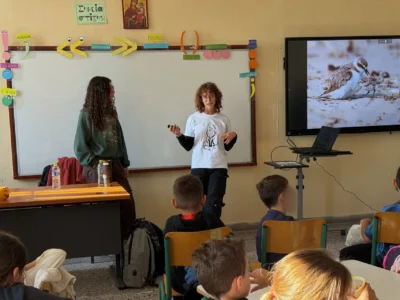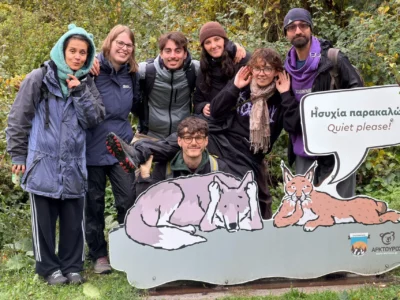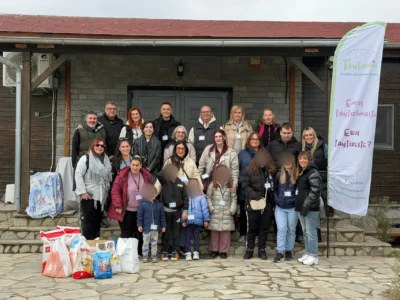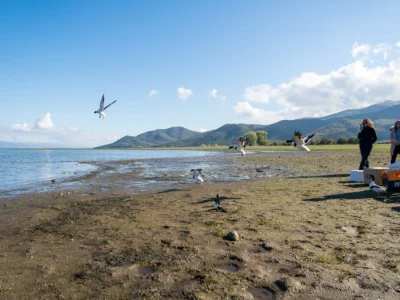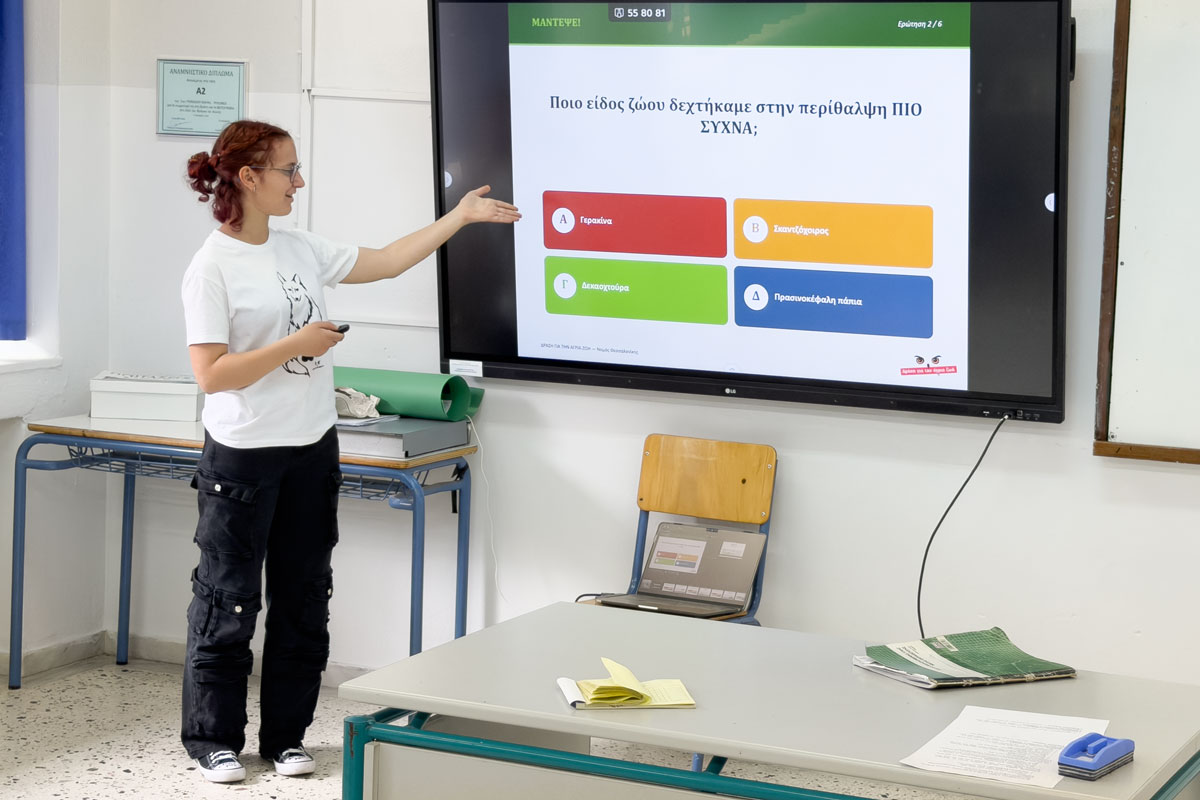
Action for Wildlife visited the 1st Junior High School of Mikra on Thursday, May 7, 2026, as part of an environmental education and awareness activity for students.
The informative presentation was attended by classes A1, A2, A3 and B1, B2, B3, with the aim of helping students better understand the Wild Animals that live around us, the dangers they face, and the role of responsible human behavior in their protection.
During the presentation, students were informed about what a Wild Animal is, the most common causes of injury and admission of Wild Animals to the Wildlife Health Center of Action for Wildlife, as well as the stages followed from the moment an animal is received until its treatment, rehabilitation and, whenever possible, release back into its natural environment.
Special emphasis was placed on cases originating from the urban and peri-urban areas of the Thessaloniki regional unit. Through the presentation of statistics and real data from the Wildlife Health Center, students had the opportunity to understand how human activity directly affects Wild Animals and which situations most often lead to injury or the need for rehabilitation.
The presentation also included practical guidance on what someone should and should not do when encountering an injured, exhausted or helpless Wild Animal. Students were informed about the importance of immediately contacting specialists, avoiding incorrect handling, and responding responsibly to every Wildlife case.
The activity is connected to the program “Wild fauna and humans: a relationship under monitoring,” which has been implemented by Action for Wildlife since October 2025, with the support of the A.G. Leventis Foundation, within the framework of the “Points of Support” program, co-funded by ten charitable organizations.
The program focuses on the systematic recording and analysis of the causes behind the admission of Wild Animals to rehabilitation, specifically animals found in the urban and peri-urban areas of the Thessaloniki regional unit. It is based on data collected by Action for Wildlife through the daily operation of the Wildlife Health Center. The data covers the last six months and comes from Wild Animal cases brought in for treatment, care and rehabilitation.
Students’ contact with real cases and recorded data helps them better understand the relationship between humans and Wildlife. At the same time, it strengthens environmental awareness and cultivates the sense of responsibility every citizen needs when encountering a Wild Animal in need.
Action for Wildlife warmly thanks the 1st Junior High School of Mikra for its hospitality, interest, and the participation of students and teachers in the educational activity.
Through educational meetings like this, knowledge becomes a tool for protection, and the younger generation comes closer to the Wildlife that exists around us and needs respect, care and responsible action.