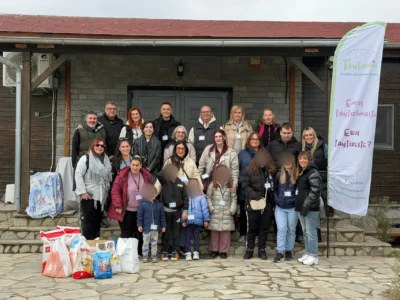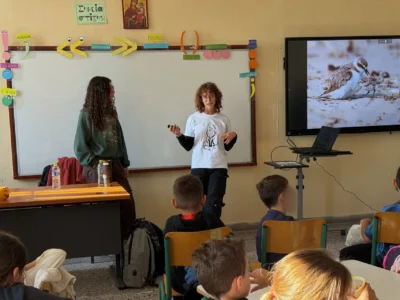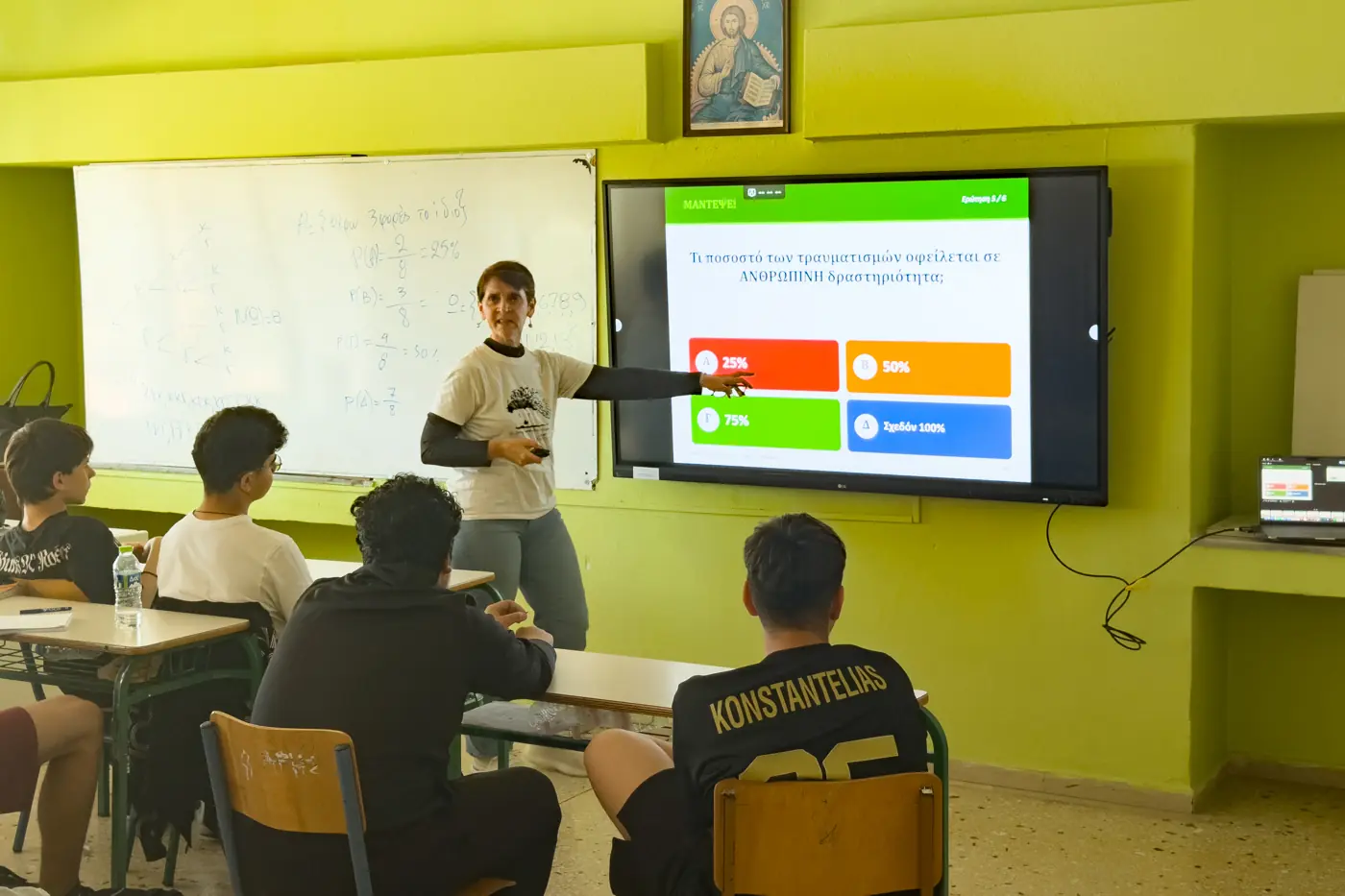
Action for Wildlife visited the 1st Junior High School of Oreokastro.
The awareness sessions took place on Monday, May 18, and Thursday, May 21, 2026, with the participation of students from the first, second and third grades of the school.
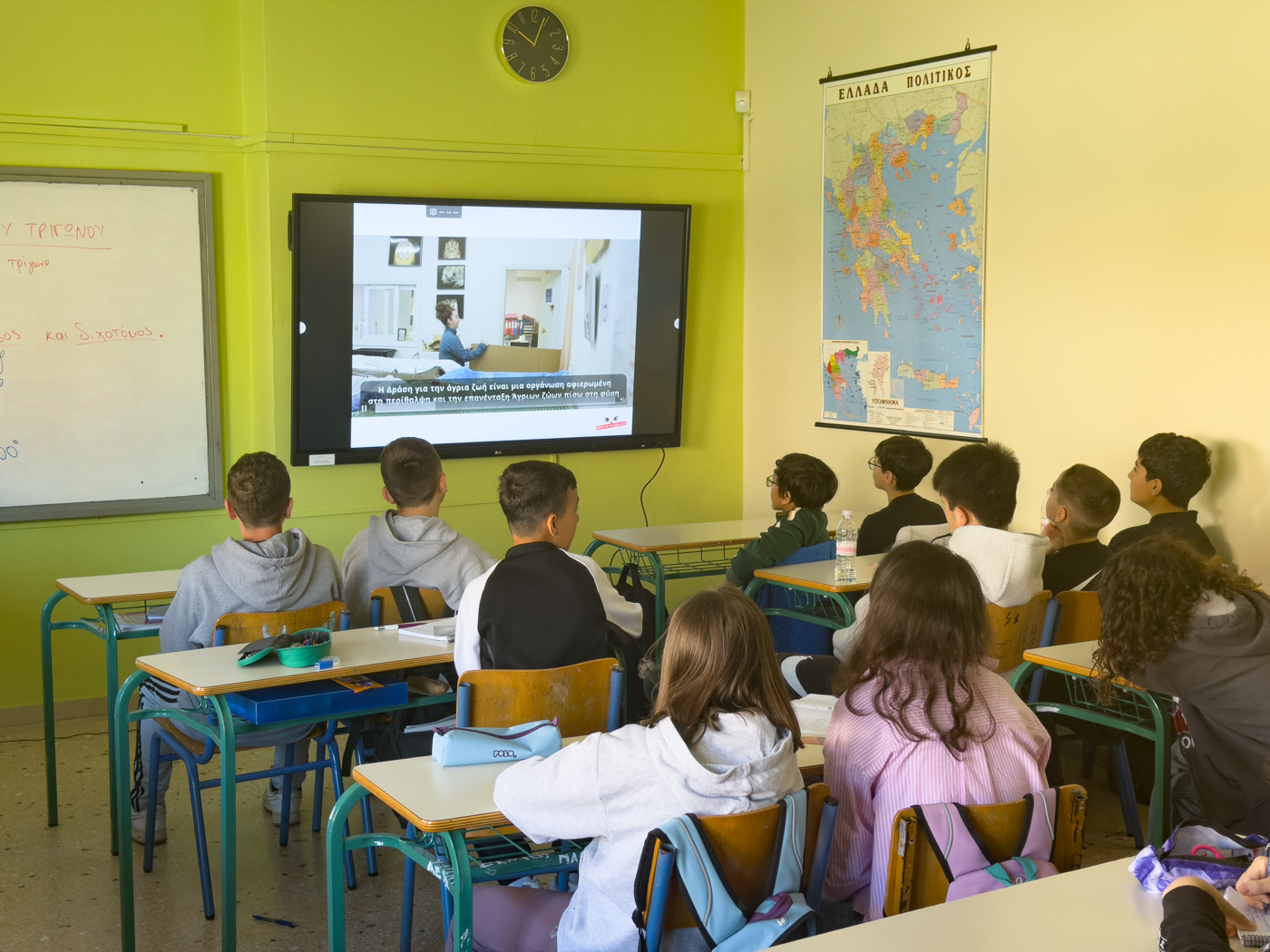
During the presentations, the students learned about the work of Action for Wildlife and the daily operation of the Wildlife Health Center. The main stages followed from the moment an injured, exhausted or helpless wild animal arrives at the Center were presented, including its treatment, rehabilitation and, whenever possible, its return to the natural environment.
Particular emphasis was placed on cases originating from urban and peri-urban areas of the Thessaloniki region. Through statistical information and real data recorded by the Wildlife Health Center, the students had the opportunity to better understand how human presence and activity directly affect wildlife.
The most common causes of injuries to wild animals were also presented. Collisions with vehicles, impacts with buildings and glass surfaces, the destruction of nests, entanglement in waste and other hazards of the urban environment are among the situations that frequently result in animals requiring treatment.
The students were also informed about the correct steps to follow when they encounter a wild animal that appears to be in danger. The importance of immediately contacting an authorized wildlife rehabilitation organization was highlighted, along with the need to avoid untrained handling, which may cause additional stress or worsen the animal’s condition.
Through photographs and real cases, the students became more familiar with the species found in cities, villages and peri-urban areas. They also actively participated in the discussion, asked questions and shared their own experiences of encounters with wild animals.
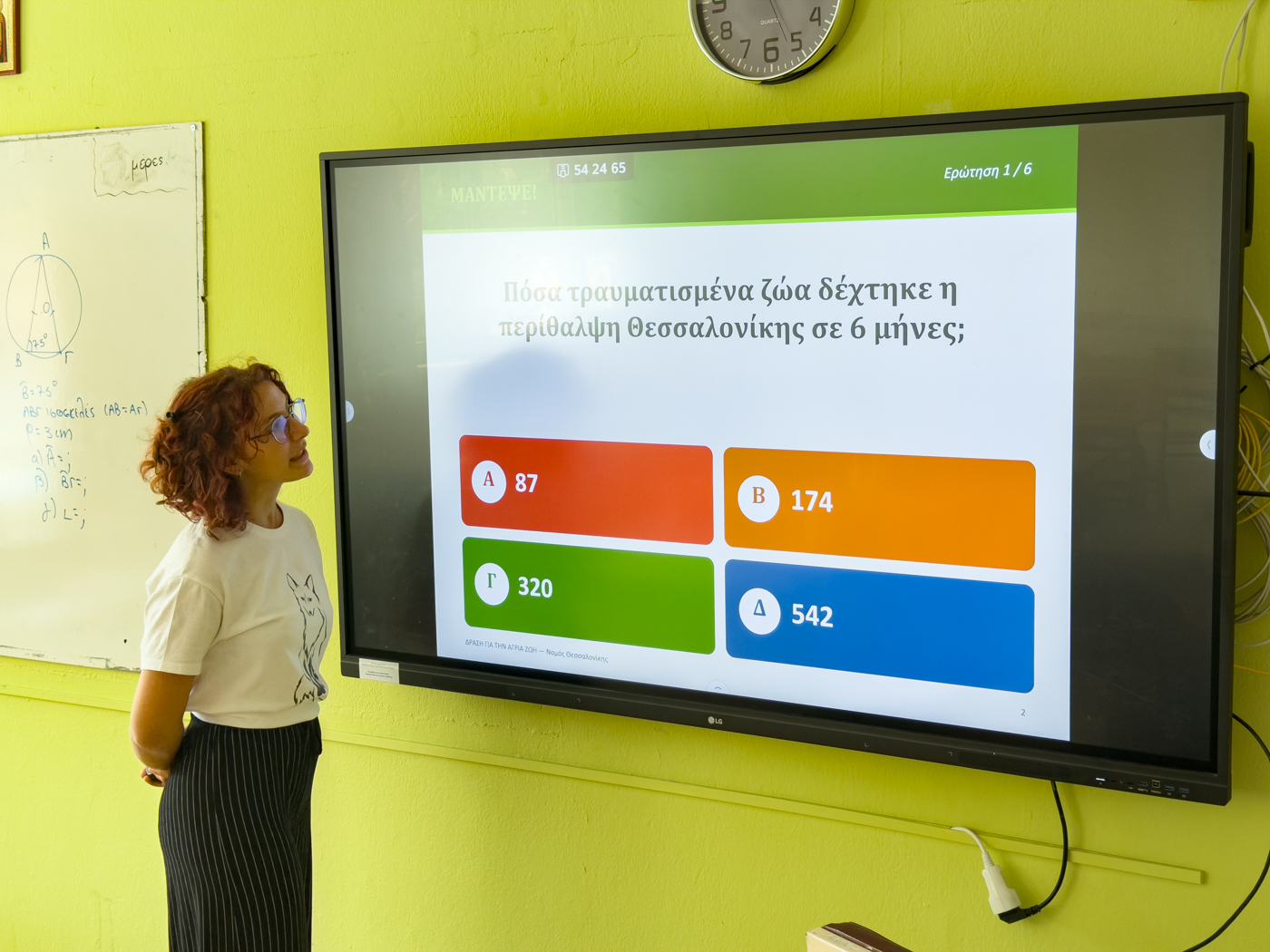
The activity is connected to the programme “Wildlife and Humans: A Relationship Under Observation”, which has been implemented by Action for Wildlife since October 2025. The programme aims to record and better understand the relationship between human activity and wildlife cases originating from urban and peri-urban environments.
The programme is implemented with the support of the A. G. Leventis Foundation, within the framework of the “Points of Support” programme, which is co-funded by ten charitable organizations and coordinated by the Bodossaki Foundation.
The visit to the 1st Junior High School of Oreokastro provided another opportunity to meaningfully inform the school community about the pressures faced by wildlife and the ways in which everyone can contribute to its protection.
We warmly thank the administration and teachers of the 1st Junior High School of Oreokastro for their invitation, cooperation and hospitality, as well as all the students for their interest and active participation.