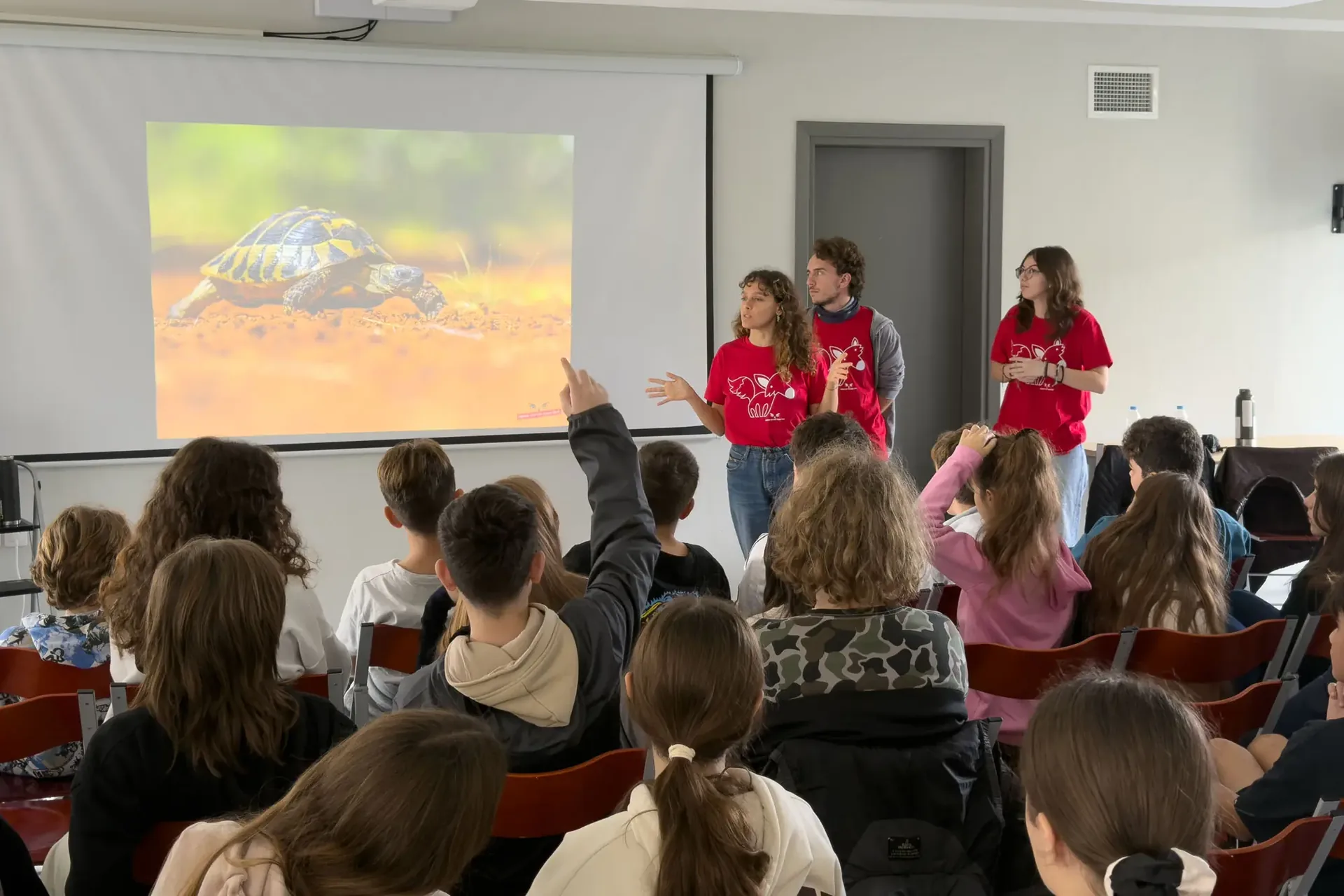
Action for Wildlife has a new page for all its visits: “Visits and talks”. Any school, association, municipality or organisation can now invite us in a few clicks, so we can talk about the wild animals that live around us, the threats they face and how we can all help protect them. In this article we focus on schools and children.
Why we go to schools
Wild animals do not live only in forests and mountains. They live in our gardens, parks, rooftops and city streets, and they feel the effects of human activity every day. Most of the injuries we treat at our centre are caused, directly or indirectly, by people.
That is why we believe that protecting wildlife starts in the classroom. A child who can recognise a Common Buzzard or a Hedgehog, who understands why a bird crashes into a window and who knows what to do on finding an injured animal, will grow up respecting and protecting nature. And what children learn in class, they take home with them.
Who we are and what we do
Action for Wildlife is a non-governmental, non-profit organisation based in Thessaloniki. We have been caring for wild animals for more than 30 years, and since 2010 we have treated more than 20,000 wild animals of Greek fauna. At our centre in the Municipality of Delta, we take in exhausted, sick, injured and orphaned wild animals from central and northern Greece.
Every animal goes through three stages:
- Treatment: the care and medical treatment it needs to recover.
- Rehabilitation: in our rehabilitation aviaries it regains its strength and gradually prepares for life outside.
- Release: once it is ready, it returns to its natural habitat.
All of this is done by people who give their time: we are 99% volunteers. Alongside treatment, environmental awareness is one of the most important parts of our work, because every animal that is not injured is an animal that never needs a “hospital”.
What happens during a visit
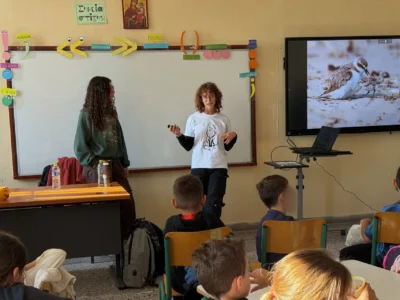
On our visits we show a presentation with photos and videos from the centre, following an animal’s journey from the moment it is found injured until it returns to the wild. But it is not a lecture: the children ask, answer and play.
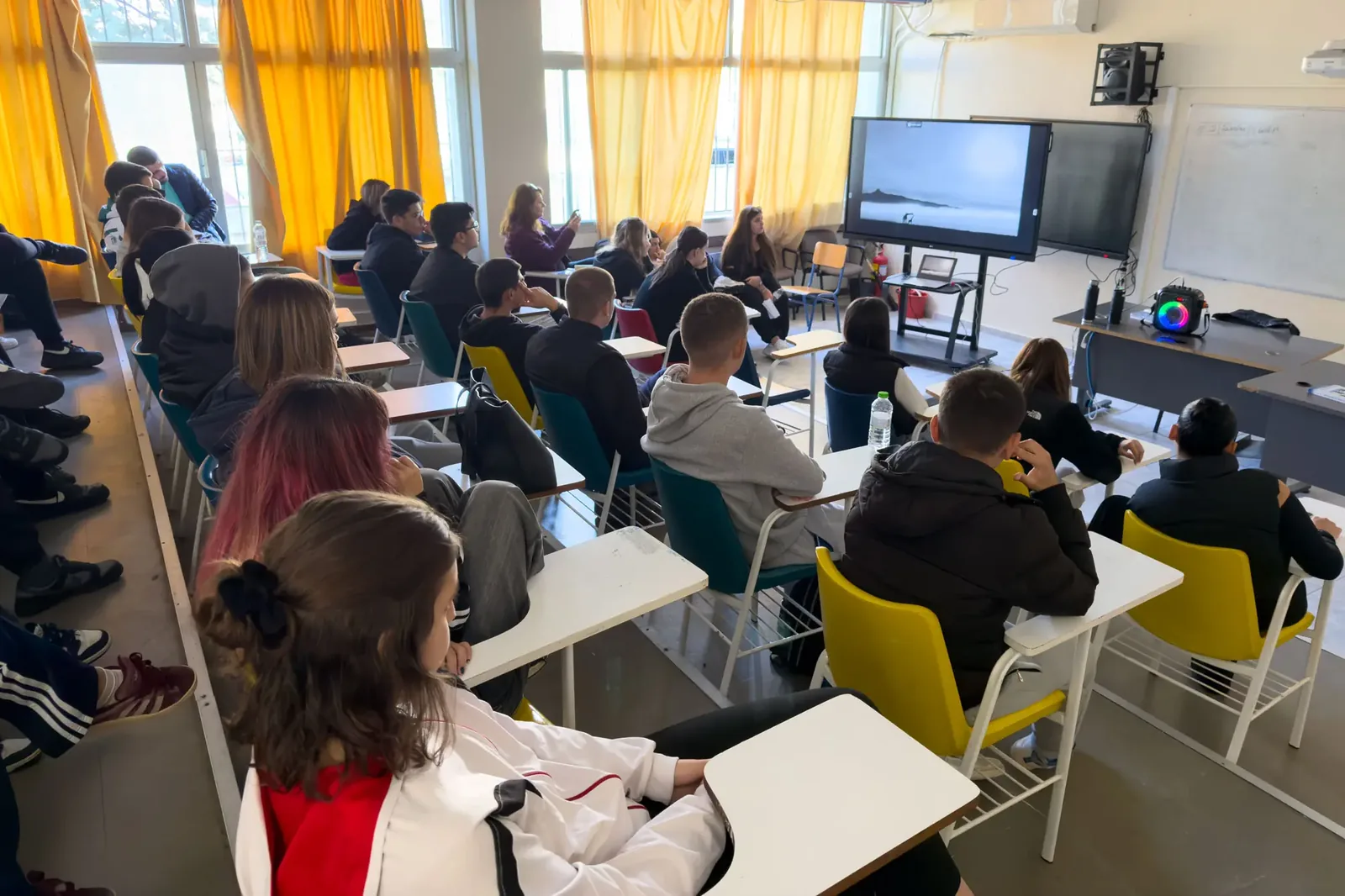
- “Wild or not?”: which animals are wild and which are not?
- “What’s that sound?”: we listen to the calls of wild animals and guess which animal each one belongs to.
- “Guess!”: questions about the animals that reach our centre and the threats they face.
- Myths and traditions about birds, such as the Greek folk tale of the Collared Dove and the story of Alcyone and the halcyon days.
- Practical advice on what to do, and what not to do, when we find a wild animal in need.
Where we went in 2026
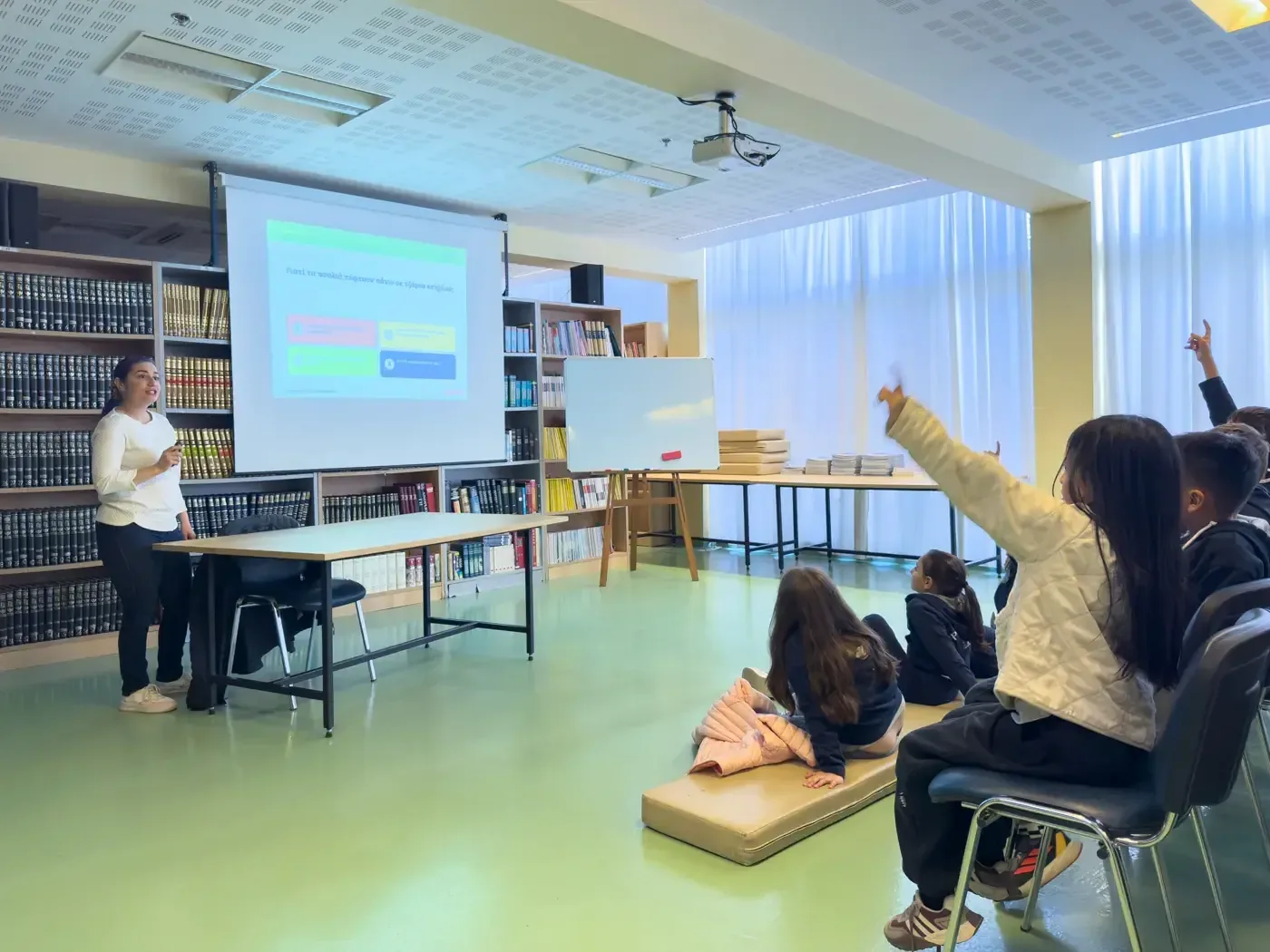
In 2026 alone, we talked about wildlife with students from the following schools:
- 2nd Primary School of Kalochori, at the Kalochori Municipal Library
- American Farm School
- Arsakeio Primary School of Thessaloniki
- 1st Junior High School of Mikra
- 1st Junior High School of Oraiokastro
- 1st Junior High School of Chalastra
- 2nd Junior High School of Evosmos
- 1st and 2nd Primary Schools of Kassandreia
Beyond schools, we also took part in awareness events for the Lesser Kestrel in Kilkis. You will find the articles from all our visits gathered at the bottom of the new page.
How to request a visit
On the “Visits and talks” page you will find a short form. It can be filled in by schools and educational bodies, associations and clubs, municipalities and public bodies, as well as any other group or organisation.
- Enter the details of your organisation and of the contact person.
- Tell us the area and the venue, and suggest one or more dates, with a time if that suits you.
- Let us know roughly how many people will take part, which classes or age groups, and whether a projector and a microphone are available.
- If you are interested in a particular topic or there are accessibility needs, add it under further information.
As soon as you send your request, you receive a copy by email, together with a link and an access code to talk with us about it. We then get in touch to agree on a date and the details.
For the new year, send us your request now. Our volunteers’ availability is limited and demand is high, so the sooner you write to us, the easier it will be to find a date that suits you.
Closer to nature, starting in the classroom
Our goal is for every child we meet to see the wild animals of their neighbourhood with new eyes: not as something distant, but as neighbours who deserve respect and protection. If you are a teacher, a parent or a member of an association, invite us now for the new year. We will be delighted to come.
You can also support our work with a donation or by symbolically adopting a wild animal.